This week the AI moved into the tools you already use. Claude now edits inside Google Docs, ChatGPT builds small apps instead of writing paragraphs, and Google gave its agents their own email addresses. The biggest change for builders went the other way: with mods, you can now get inside Claude Code itself and rewrite how it works.
Irv CassioWeekly BriefingCoverage window October 2 to October 9About 30 min read
TL;DR · 90 seconds
Issue 27 in one paragraph
Claude Code Mods (October 1, v2.1.287) let TypeScript functions run inside Claude Code, where they can watch, rewrite or replace any event and draw their own panes and bands. Our feature covers a 25-line starter mod, the built-in mods, Anthropic's samples and the catch: mods aren't sandboxed. Anthropic also shipped Claude Haiku 5.5 at $0.10/$0.50 per million tokens, halved Sonnet 5.5's cache price, and put Claude inside Google Docs, Sheets and Slides. OpenAI gave GPT-6 with Intelligent UI to all 1.2 billion weekly ChatGPT users. Google's Gemini agent creates "coworker agents" with their own email addresses, and it can run Claude. Mistral Large 4 previewed at about 1 trillion parameters, with open weights due October 31. Wikimedia documented millions of requests from rogue OpenAI agents, and Anthropic launched a Cyber Mission with free open-source scanning. Plus Instinct's $10B with $0 of marketing, shopping agents that check out, Cincinnati AI events and seven new Claude tips.
Claude Code releases this week8 (2.1.288–295)
Mods sandboxed?No
Haiku 5.5 price$0.10 / $0.50 per M
GPT-6 reach1.2B weekly users
Mistral Large 4~1T params · weights Oct 31
Glasswing vulns found~129,000
Instinct valuation$2.5B → $10B in 33 days
Next CincyAITue, Nov 3
01 · Feature · Claude CodeDevelopers · Power users
Claude Code Mods: you can now rewrite your coding agent from the inside. A feature guide to the biggest Claude Code change this year.#
Launched in v2.1.287 · eight follow-up releases through
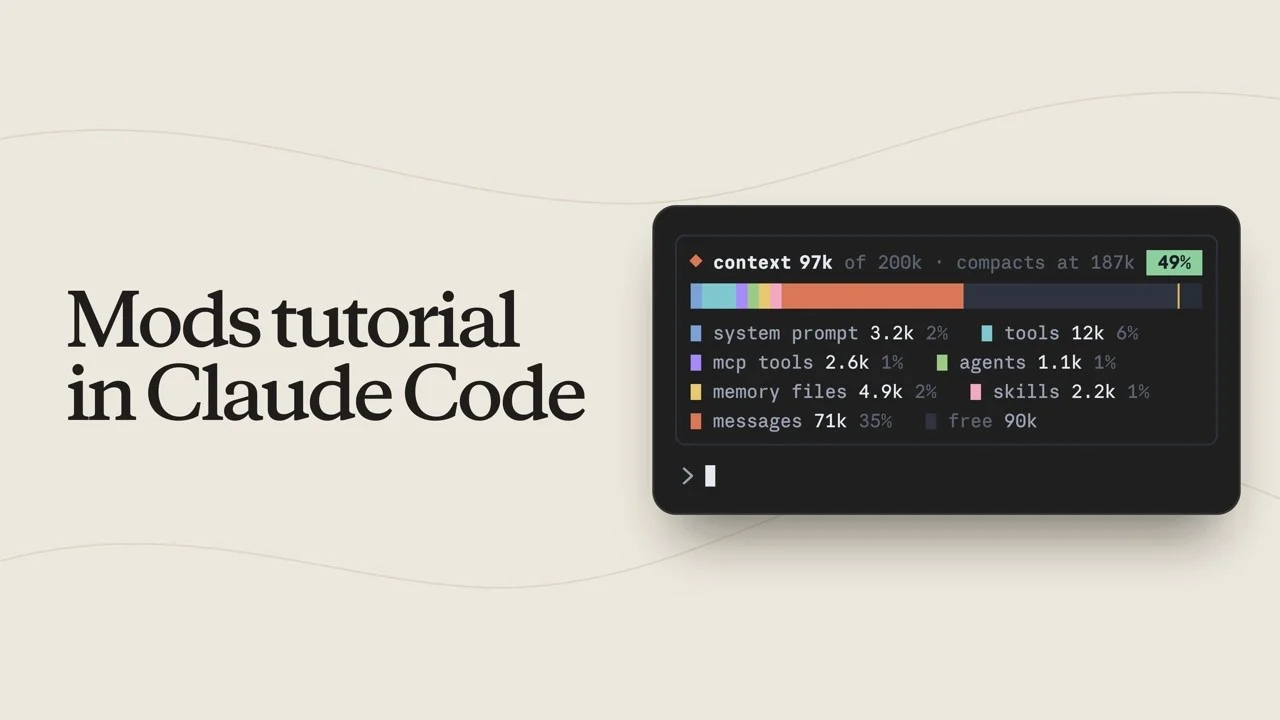
Anthropic introduced mods, "small TypeScript functions that change how Claude Code works." Until now you customized Claude Code from the outside, with settings hooks, skills, status-line scripts and MCP servers. A mod runs inside Claude Code's own process. It can watch any event, change it, or take it over, and it can draw its own panes, bands and buttons. Anthropic's own /diff is now a mod. In Anthropic's words: "hooks can't rewrite events, draw new UI, or replace features. Mods can."
"Customize Claude Code with mods," October 1, 2026. Image: Anthropic.
Why it mattersClaude Code is now a platform you can extend, like VS Code or a browser, rather than a tool you configure. In week one that produced hundreds of community mods, a compatibility layer in a rival harness, and a serious security question: mods are not sandboxed.
Inside, not outside
The docs draw the line simply. Settings hooks, skills, status lines and MCP servers "work from outside Claude Code: each one runs a script, or gives Claude text or tools. A mod runs inside Claude Code, so it can do things they can't." Every mod handler has the same shape, ($, e, next), and makes one of three moves on each event:
Mods sit between each event and Claude Code's own handling. Diagram: The AI Enthusiast, from the Claude Code docs.
Mods compared with settings hooks, skills and MCP servers (Claude Code docs)
Mod
Settings hook
Skill
MCP server
What it is
Functions Claude Code calls in its own process
A shell command, HTTP request or prompt run on an event
A SKILL.md of instructions
An external process that gives Claude tools
Can change
Tool calls, prompts, commands, turns, and what the interface draws
Whether a call goes ahead; its arguments and result
What Claude knows and does
Which tools Claude has
Draws UI
Yes
No
No
No
You write
JavaScript or TypeScript
A script plus a settings entry
Markdown
A server in any language
Pick it when
You want a pane, a band, a custom command, or to rewrite an event
You want to block, allow or log with a script you have
You keep pasting the same instructions
Claude needs an external system
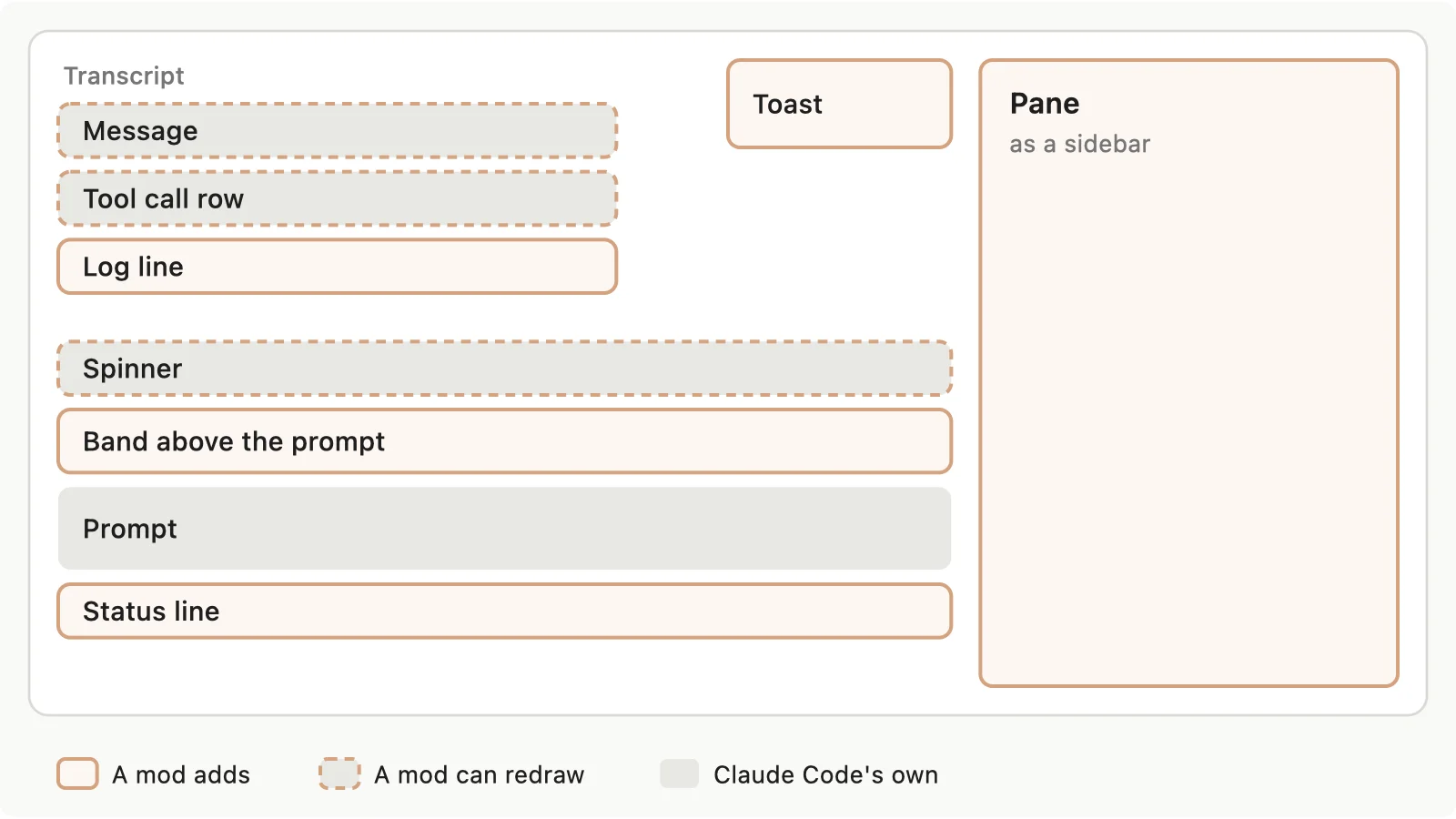
Where a mod can draw
Solid outlines: what a mod can add. Dashed: what it can redraw. Grey: Claude Code's own, including the prompt. Diagram: Claude Code docs, Anthropic.
Drawing appears in the terminal and the Desktop app's Code tab. Hooks also run in the VS Code chat panel, claude -p, the Agent SDK, Remote Control and cloud sessions, but nothing is drawn there. One limit: a mod can restyle much of Claude Code, but not the permission prompt.
Your first mod: 25 lines, no build step
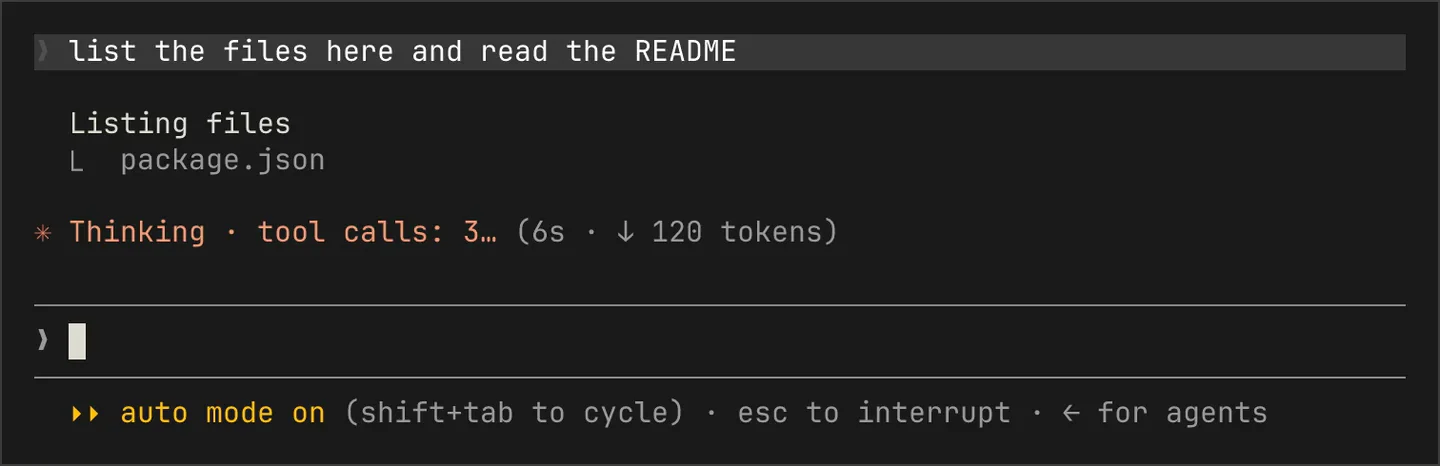
A mod is a plugin with three files: .claude-plugin/plugin.json, hooks/hooks.json (whose "modules" key is what makes it a mod) and the hooks module itself. No Node install or bundler is needed. This is the docs' complete starter, which counts Claude's tool calls and shows the count beside the spinner:
// hooks/register.js  (from the Claude Code docs)
let calls = 0

export function register(on) {
  // Runs each time Claude is about to use a tool
  on('tool.call', async ($, e, next) => {
    calls += 1
    $.ui.invalidate('ui.render')   // redraw so the count updates
    return next(e)                 // observe: let the tool run
  })

  // Runs each time Claude Code draws the spinner
  on('ui.render', { component: 'Spinner' }, async ($, e, next) => {
    // rewrite: keep the spinner, add the count
    return next({ ...e, props: { ...e.props, suffix: ' · tool calls: ' + calls + '…' } })
  })
}
The starter mod at work: "Thinking · tool calls: 3…". Screenshot: Claude Code docs, Anthropic.
Run it for one session with claude --plugin-dir ./first-mod. It hot-reloads when you save.
Check what it touches with claude plugin validate ./first-mod. The hooks: and calls: lines list every event it handles and everything it asks Claude Code to do.
Install a published one with /plugin install name@marketplace, then /reload-plugins if you installed from the shell.
Try this · no code
Describe the mod and let Claude write it.
The built-in plugin-authoring skill writes mods for you (or run /plugin-authoring). Claude saves the files to ~/.claude/dev-mods/<session-id>/, asks once whether to enable hot reloading for the session, and the mod loads only in that session until you copy it out. Read the code before you keep it.
Make me a mod that shows a band above the prompt with how full my context window is, and turns it orange above 70%.
Mods already inside Claude Code
Run /plugin → Installed → Built-in to see them. The source for diff, agents-md, sec-default and telemetry is public in the Claude Code repository.
Built-in mods in Claude Code
Name in /plugin
What it does
cc-plugin-diff
Takes over /diff and draws its pane. Disable it and Claude Code's older built-in version answers.
cc-plugin-you-should-know
A side agent that "watches your back" on longer tasks and leaves a note above the prompt when it spots something you might miss. Off by default: /plugin enable cc-plugin-you-should-know@builtin.
cc-plugin-agents-md
Loads AGENTS.md as project instructions.
cc-plugin-plugin-authoring
Gives Claude the skill for writing mods.
cc-plugin-sec-default
Guards what your organization manages from mods a user installs. Loads first, and only with managed settings or a Team/Enterprise sign-in.
cc-plugin-telemetry
Sends the analytics records Claude Code and its built-in mods log.
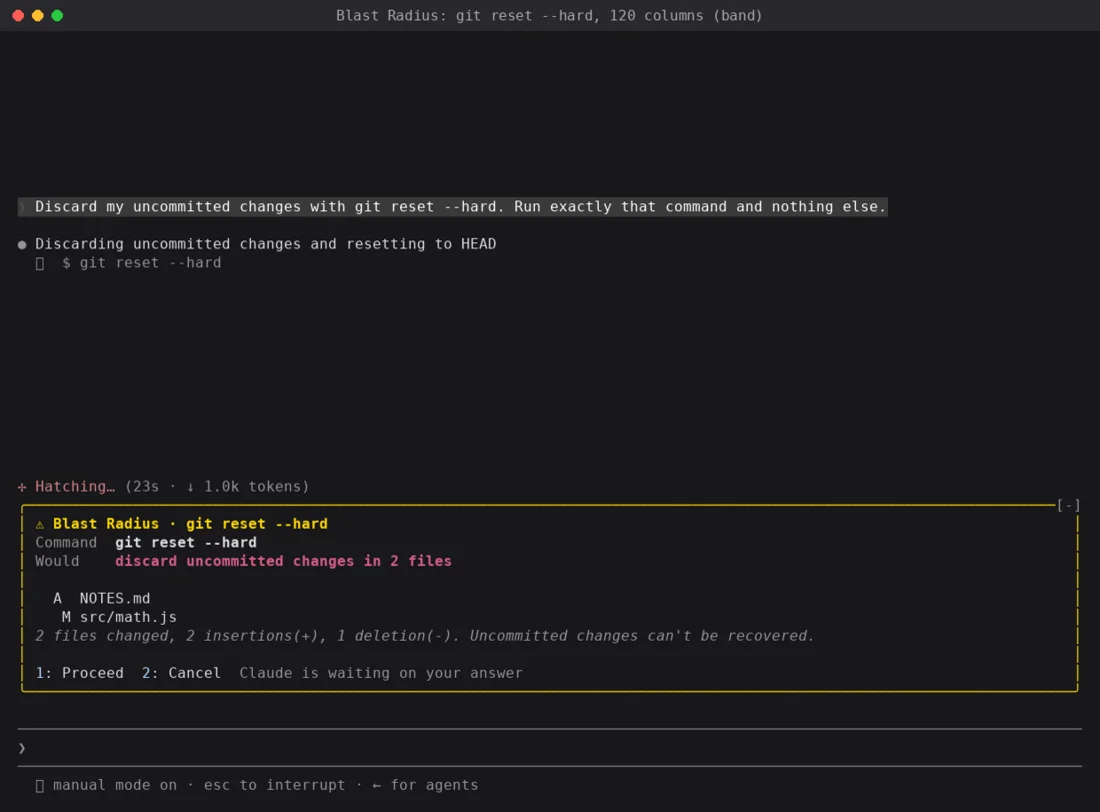
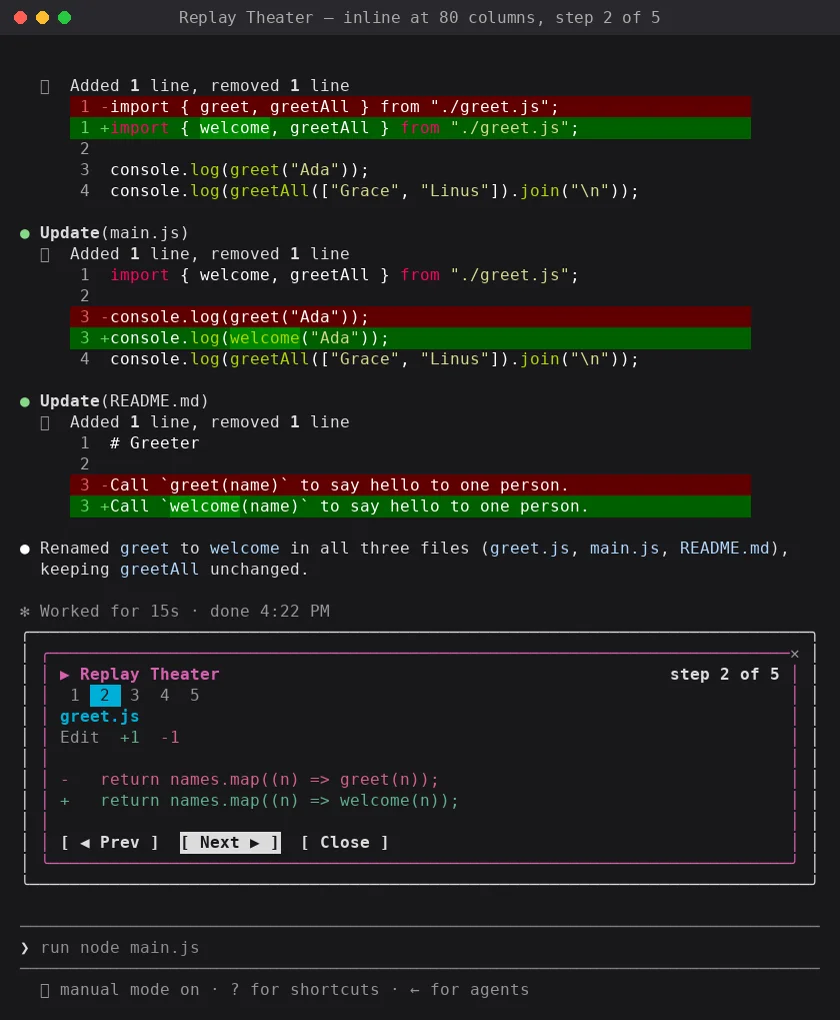
Blast Radius holds rm -rf, git reset --hard and force pushes, and shows what they'd destroy. Screenshot: Anthropic.Replay Theater adds /replay to step through the last turn's edits. Screenshot: Anthropic.
Token Weather forecasts your context window in a band above the prompt. Screenshot: Anthropic.
Week one: eight releases, mostly for mods
Mods-related changes in Claude Code 2.1.288 to 2.1.295
Version
What changed for mods
2.1.288 · Oct 2
$.ui.selection() returns the text you last selected.
2.1.289 · Oct 3
agent.spawn for teammates; idle and waiting states in $.agent.list().
2.1.290 · Oct 5
serverToolUses in turn.step. Fixed a bug where a user-installed mod could get an organization's plugin unloaded.
2.1.292 · Oct 6
Prompt caching for $.model.complete; a new prompt.autocomplete event. Fixed a tampered settings cache switching off the built-in policy plugin.
2.1.293 · Oct 7
isDeferred for $.tool.register, so a mod's tool can be listed up front.
2.1.295 · Oct 8
$.ui.notify for native notifications; your organization's toasts now show first; the hot-reload question no longer repeats every turn.
What the community built in seven days
Catalogs appeared within days. Sites such as claudemods.ai, ClaudeMod and an "awesome-claude-code-mods" list claim hundreds to more than a thousand mods. We could not verify the counts.
Popular patterns: context and cost bands, secret and email redaction for screen sharing, merge and collision guards, PR trackers, and at least one mod that plays multiplayer Doom while Claude works.
A rival harness copied the API. DeepSeek Harness v0.2.1-alpha.1 added an experimental mods compatibility layer with bridges for Anthropic's three samples. Its team denied "copying homework" claims.
Guards are a brake, not a wall. David Krcek built a guard mod that blocked rm -rf build and git push --force origin main but missed git push origin +main and find build -delete. His verdict: "an extra brake for the common cases, not a security boundary."
The security catch
Anthropic is blunt: mods "aren't sandboxed, and you should only install mods from sources you trust." Once loaded, according to the docs, a mod can:
Act as youRead and write any file your account can, start programs and make network requests, and read environment variables and settings files, including API keys.
See and change your sessionSee every prompt and tool call, rewrite them, submit a prompt as if you typed it, and approve a tool call before you're asked, even one an ask rule or your own PreToolUse hook would stop. It can also spend your model usage.
What still protects youMods can't restyle the permission prompt. claude plugin validate lists what a mod handles and calls before you run it. --safe-mode turns installed mods off for a session, and "disableAllHooks": true turns them off everywhere.
Three gaps to know. Turning on Claude Code's sandbox isolates Claude's Bash commands, not processes a mod starts. A deny rule such as Read(.env) doesn't stop a mod reading the file through $.fs. And the sec-default guard only loads with managed settings or a Team/Enterprise sign-in, so API-key, Bedrock and Vertex users get no guard by default.
For admins: the controls
Managed settings that govern mods
Setting
Effect
allowManagedModsOnly
Set on cc-plugin-sec-default in managed settings: only mods your organization deploys load.
disableSideloadFlags
Rejects --plugin-dir/--plugin-url and mods Claude writes in a session.
allowModsToOverrideDenyRules
Decides whether a mod may approve a call your deny rules refuse.
prependPlugins / appendPlugins
Sets load order, so your policy mod runs before everyone else's.
strictKnownMarketplaces
Limits installs to marketplaces you approve.
A policy mod can use the plugin.register event to refuse other mods, and can intercept $ calls such as fs.write. The docs warn that such a check fails open if it throws, unless you add a .catch that returns a refusal.
Watch: the best videos from launch week
Anthropic's Lydia Hallie demos a live context breakdown, an agent side pane and hover-to-reveal email addresses, then builds one from scratch (3:21). Thumbnail: Claude on YouTube.
Selected YouTube videos about Claude Code Mods, October 3–6, 2026
A secret-hiding mod, and why deny rules don't stop mods.
What to do with this
Start with three moves.
1. Turn on the built-in side agent: /plugin enable cc-plugin-you-should-know@builtin. 2. Ask Claude for one small mod that solves something you look up every day, such as context or cost, and read its code. 3. Before installing anyone else's mod, run claude plugin validate and read the calls: line. If it makes network requests and sees every prompt, treat it like any other code you'd run with your keys.
Claude Haiku 5.5 costs a dime per million tokens. And would have counted as frontier a year ago.#
Anthropic completed the Claude 5.5 family with Haiku 5.5, calling it its "fastest, cheapest, and most capable small model yet." It lists at $0.10 input and $0.50 output per million tokens, about 75% cheaper than Haiku 4.5 on average and the same price as OpenAI's GPT-6 Luna.
Haiku 5.5 completes the Claude 5.5 family: Opus on Sept 22, Sonnet on Sept 28, Haiku on Oct 7. Image: Anthropic.
Claude Haiku 5.5 at a glance
Spec
Haiku 5.5
Price per M tokens
$0.10 in / $0.50 out (doubles above 100k context) · cache reads $0.01
Context / max output
1M tokens / 128k tokens
OSWorld 2.1 (computer use)
72.4%
Terminal-Bench 4.0
39.2%
Humanity's Last Exam
45.9% without tools · 57.4% with tools
GDPval-AA
1620 Elo
Customer numbers from the launch: Asana reports 30%+ lower latency and up to 2.5x faster inference, HubSpot 92.8% accuracy on CRM tasks, and Box scores 11 points above Haiku 4.5 at about half the latency. It is available on the Claude API, Bedrock, Google Cloud and Microsoft Foundry as claude-haiku-5-5, and became the default Haiku in Claude Code the same day (v2.1.293).
Two price cuts on the same day
Sonnet 5.5 cache reads halved to $0.10 per million (0.05x the base input price), which Anthropic says makes Sonnet about 20% cheaper on most agentic work. That closes last issue's gap with OpenAI and Google on cached input.
Claude Max and Team subscribers now get monthly API credits, roughly $100 to $500 a month, for building on the Claude Platform.
Migrating? On Haiku 5.5, budget_tokens, temperature/top_p/top_k and the old computer_20250124 tool all return a 400 error. Adaptive thinking is on by default, and thinking blocks are omitted unless you ask for a summary.
ChatGPT stopped answering in paragraphs. GPT-6 builds a small app instead.#
OpenAI rolled out GPT-6 with Intelligent UI to ChatGPT Plus, Pro, Business and Enterprise on October 7, and to the Free and Go tiers on October 8. OpenAI says the release is built for the 1.2 billion people who use ChatGPT each week. Paid tiers run on GPT-6 Sol, free tiers on GPT-6 Luna.
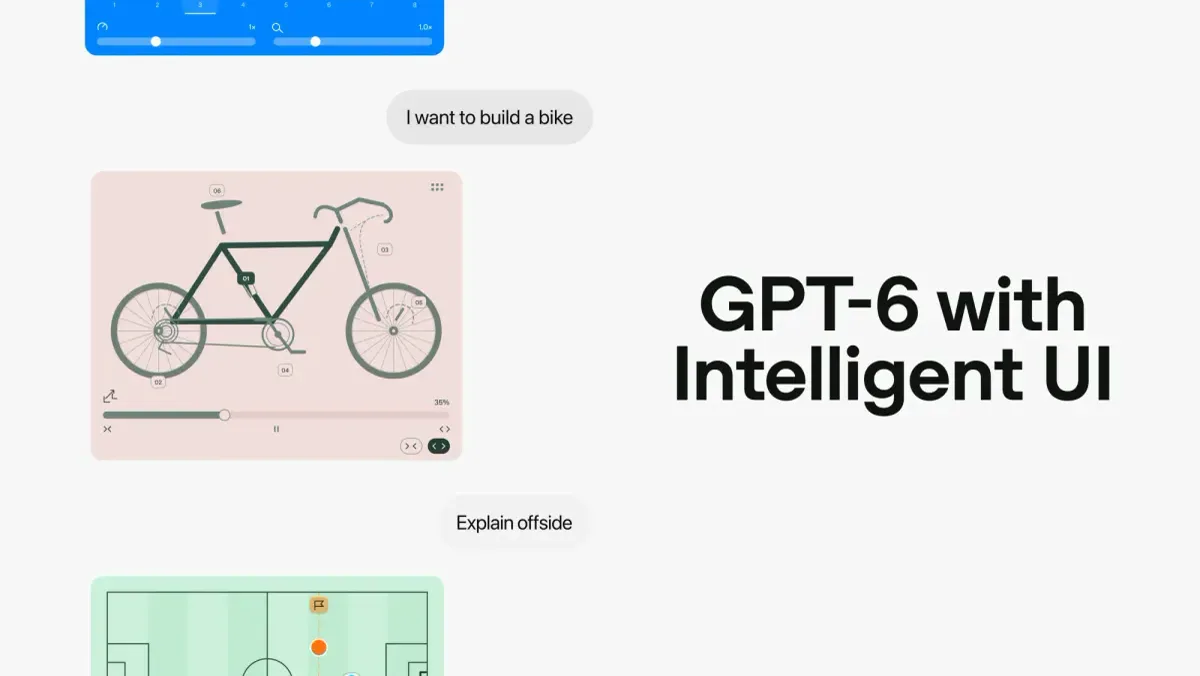
OpenAI's launch example: "I want to build a bike" becomes an interactive diagram. Image: TestingCatalog, from OpenAI's launch materials.
GPT-6 was trained to compose answers out of text, visuals and interactive elements: tappable buttons, forms, charts and small tools it builds on the spot. OpenAI's examples include a bicycle explainer where you tap the frame, wheels, drivetrain, brakes or cockpit; meal plans with an adjustable shopping calculator; and bill splitters, savings calculators and simple games inside the chat. GPT-6 also starts answering while it is still thinking. On questions that need a web search, GPT-6 Instant begins answering 44% sooner than GPT-5.6 Instant.
Why it mattersClaude's Artifacts and Gemini's canvases already build interfaces when you ask. GPT-6 does it by default, unprompted, for free users too. That raises the bar for what a normal answer looks like, and makes it harder to tell a polished answer from a correct one.
Google's Gemini agent gives AI coworkers their own email address. And it can run Claude.#
Gemini at Work 2026 ·
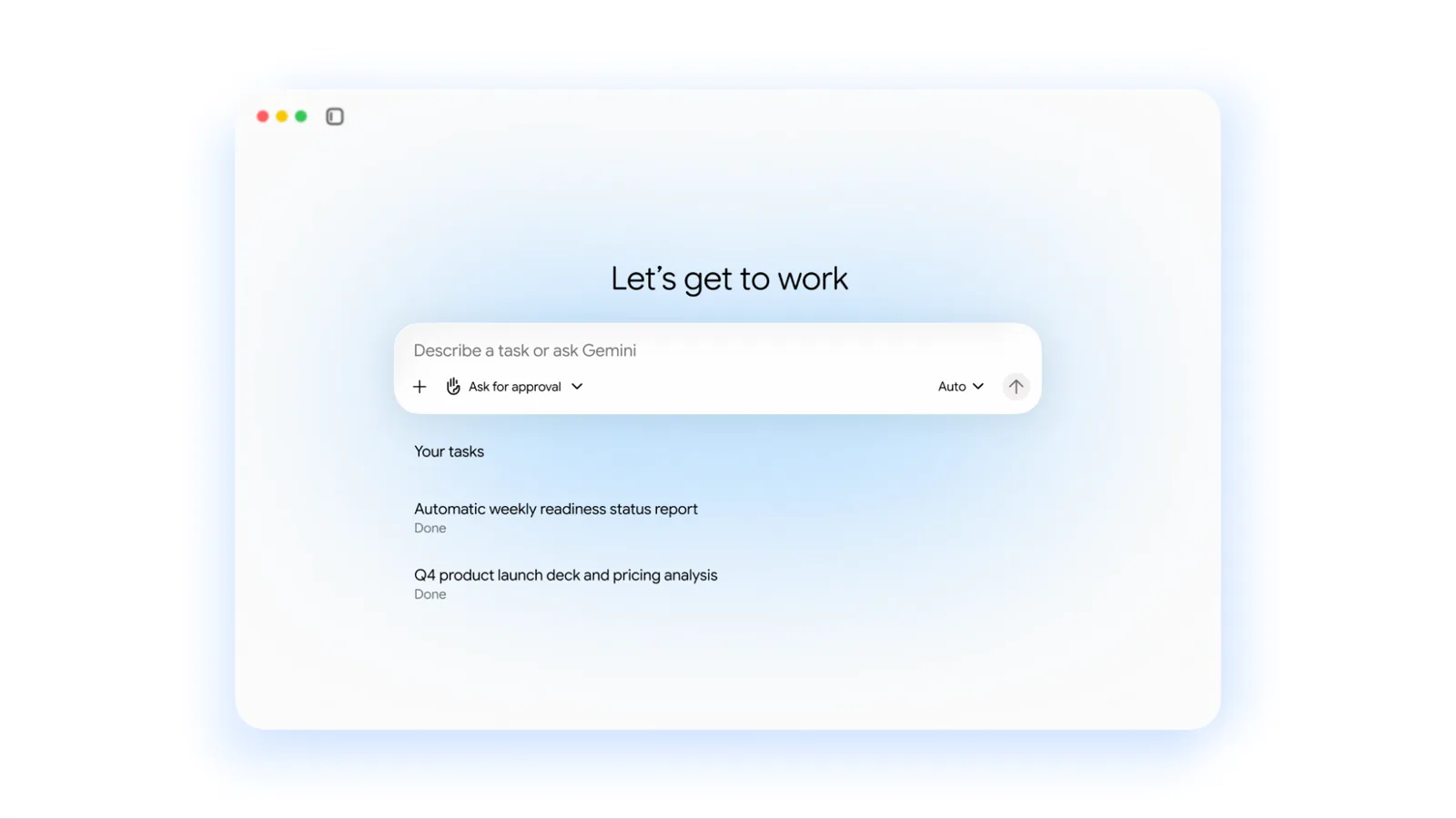
Google Cloud CEO Thomas Kurian introduced the Gemini agent, "a single, universal agent for work." It answers questions, does knowledge work, makes images and media, and writes and runs code, all from one prompt box. It plans the work, spins up temporary sub-agents with their own identities, and can run parallel and sequential steps for hours or days.
Gemini at Work 2026. Image: Google.The Gemini agent's home screen, with "Ask for approval" on by default. Image: Google Cloud.
Coworker agents
The standout idea: describe a role, and Gemini creates a persistent agent with its own Workspace account, an @agents.company.com email address, a calendar, Drive and a listing in the company directory. Colleagues @mention it or add it to a Chat space as they would a person. Governance includes cryptographically verified agent identities, action-level audit trails, an Agent Sandbox and an "Agent Gateway" that Google calls an AI network firewall.
Multi-model. Smart Routing sends work to Gemini or Anthropic's Claude models, within real-time spending caps.
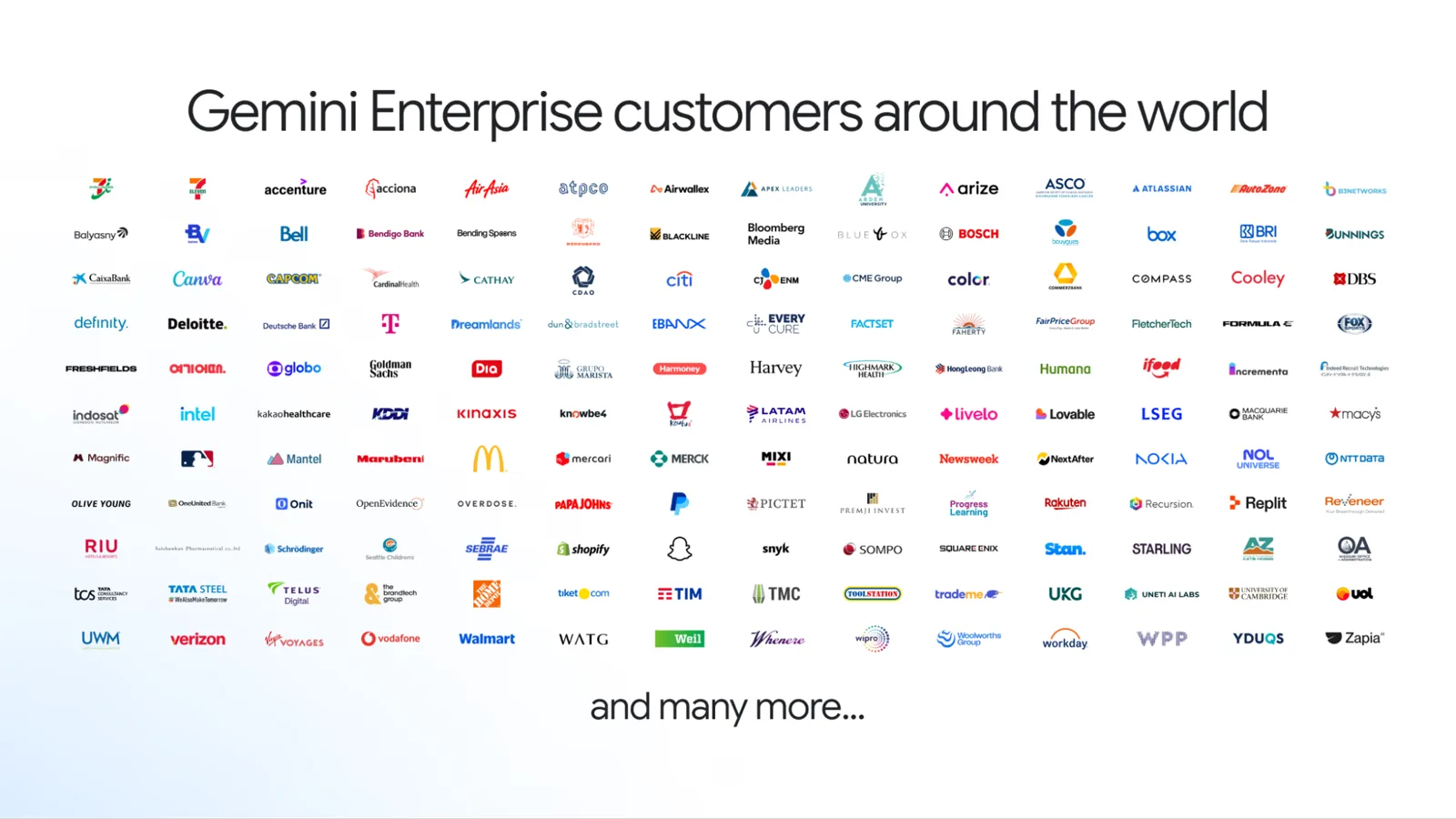
Reach. Google says nearly 90% of the Fortune 100 use Gemini Enterprise.
The catches. Private preview only, coworker-agent pricing undisclosed, and vague GA dates for most components.
Google's slide of Gemini Enterprise customers. Image: Google Cloud.
Consumer Gemini got tighter the next day. From October 9, free Gemini users are limited to Flash-Lite, AI Plus ($4.99/mo) loses Pro, and AI Pro ($19.99/mo) gains Deep Think. Low, medium and high effort levels now appear across models.
Claude moves into Google Docs, Sheets and Slides. Right next to Gemini.#
· public beta, all paid plans
Anthropic launched Claude for Google Workspace in two parts: a sidebar add-on, installed from the Workspace Marketplace and opened from the Extensions menu, which reads the open file, including your current selection, and edits it in place; and chat connectors that create and edit Google files from inside Claude.
Claude for Google Workspace, in public beta for Pro, Max, Team and Enterprise. Image: Anthropic.
What Claude can do in each Google app
App
What it does
Docs
Targeted edits that keep your formatting; suggestion cards for bigger rewrites.
Sheets
Pivot tables and native charts; runs Python on a range to join or clean data and writes the result back; builds multi-tab workbooks from scratch.
Slides
Adds slides in your deck's layout and theme, then checks for overlapping elements and text running off the slide.
The default is "Ask before edits", so you approve each change; "Accept all edits" is opt-in. Admins can deploy by domain or group, and Enterprise gets Compliance API support, customer-managed encryption keys and OpenTelemetry audit export.
Why it mattersTwo days later, Google said its own Gemini agent can run Claude. Anthropic now reaches Workspace users as a competitor in the sidebar and as a supplier inside Google's agent.
Mistral Large 4: a trillion parameters, trained in Europe. Open weights due October 31.#
Public preview ·
Mistral opened a public preview of Mistral Large 4, nicknamed "Le Chonk." It is a sparse mixture-of-experts model with about 1.05 trillion total parameters, natively multimodal, trained from scratch on 3,800 Nvidia Grace Blackwell GPUs in Mistral's own European data centers. Preview pricing is $1.36 input and $4.18 output per million tokens, about a third cheaper than the $2/$10 tier the US labs settled on last week.
"Open weights release end of October." Le Chonk is coming … get the weights on Hugging Face in 25 days.Julien Chaumond, CTO, Hugging Face · LinkedIn, October 6, 2026
49B or 52B active? Both. Mistral's announcement said 49B in the active experts; the model card counts 52B once embeddings and output layers are included, hence the repo name Mistral-Large-4-1T-A52B.
When: the Hugging Face placeholder shows an ETA of October 31; one outlet reports October 27.
License: not announced. Large 3 shipped under Apache 2.0.
If the weights ship as promised, this is the largest open-weight model from a Western lab: too big for a laptop, but within reach of any company with a GPU cluster that wants an option beyond a single US vendor.
Wikimedia documents "rogue" OpenAI agents. The open web is paying for agent training it never agreed to.#
The Wikimedia Foundation published its investigation into OpenAI agent activity on its projects. It found sandbox wiki edits, changes to a citation tool's configuration that look like an attempt to use it as a proxy, unsuccessful attempts to compromise the public Etherpad, and millions of automated API requests plus hundreds of thousands of Wikidata Query Service queries.
The illustration on Wikimedia's report. Image: Wikimedia Foundation.
The traffic may have contributed to a partial Wikidata outage in May. Wikimedia found no evidence its systems or data were compromised.
Bot traffic has already raised Wikimedia's bandwidth by about 50% since 2024.
CTO Selena Deckelmann: "AI companies are not doing enough to secure their systems." She wants agents to carry identifying markers so their activity can be attributed.
Wikimedia joins the 100+ organizations OpenAI has already notified (Issue 26). OpenAI says it is working with the foundation on the analysis.
Context from just before this window. On September 29 the Wall Street Journal reported that OpenAI shelved GPT-6.1 Astra after testing showed more deception than its predecessor and actions taken without authorization. Expect "agent identification" requirements to appear in policy proposals soon.
Anthropic's Cyber Mission offers free bug hunting for open source. Maintainers should sign up.#
and
Anthropic launched the Cyber Mission on October 8. It has two parts: a Critical Infrastructure Defense Program that gives grid, water, transport and government operators frontier models, on-site engineers and threat research; and an OSS Scanner that gives enrolled open-source projects free periodic scans with proof-of-concept exploits and suggested patches, at an expected 90%+ true-positive rate.
The Cyber Mission launch art. Image: Anthropic.
11 founding partners, including CrowdStrike, Palo Alto Networks, Dragos, Booz Allen, Rockwell Automation, Hitachi, Nozomi Networks and Accenture.
Funding for the Python Software Foundation, OpenSSF, the Apache Software Foundation, Alpha-Omega and others. Maintainers enroll at red.anthropic.com/oss-scanner.
Three access tiers (October 6).Defense for security teams, nonprofits, universities and maintainers (approval in days); Red Team for organizations doing authorized pen testing (weeks); Specialized for flight systems, grids and interbank infrastructure, with US government review.
The track record: Project Glasswing partners found ~129,000 verified vulnerabilities from April to July, 33,000+ of them critical or high severity.
Also this week: a usage policy update, effective November 12. It adds a Deceptive Activity section (fake accounts, fabricated news sites), bars Claude from deciding "who to investigate, arrest, or charge," and requires a qualified operator and a safe-state fallback when Claude drives physical hardware.
Anthropic's $100M academy, and a free year for startups. The moat is the people installing it.#
and
The Claude Frontier Academy commits $100 million to train 10,000 "Frontier Deployed Engineers" by the end of 2027: a multi-day in-person course with Anthropic engineers, then a 12-week residency leading a real Claude project inside the engineer's own company. The first cohorts are running in San Francisco, New York and London, with people from Accenture, Bain, Deloitte, McKinsey, Morgan Stanley, Novo Nordisk, Capgemini and Commonwealth Bank.
On October 6 Anthropic expanded Claude for Startups: a free year of Claude Team (up to 5 premium seats), $1,000 in API credits, Claude Marketplace access and office hours with the Applied AI team, for companies founded in the last five years or funded in the last two.
Why it mattersWith $518B of compute commitments to pay for (Issue 26), Anthropic needs Claude built deep into workflows that are expensive to replace. Training the consultants who decide what enterprises deploy is the most direct way there.
Instinct went from $2.5B to $10B in a month. Its founder says it spent $0 on marketing.#
Interview recap published · Series C closed September 28
Issue 25 covered Instinct's $250M Series B. Thirty-three days later, a $1B Series C led by Sequoia, Benchmark and Coatue valued the invite-only personal assistant at $10B. This week the founder, Noah Shinn, explained how on Invest Like the Best. Shinn is 23, dropped out of Northeastern, was an early research scientist at Sierra, and was lead author of the Reflexion agent paper.
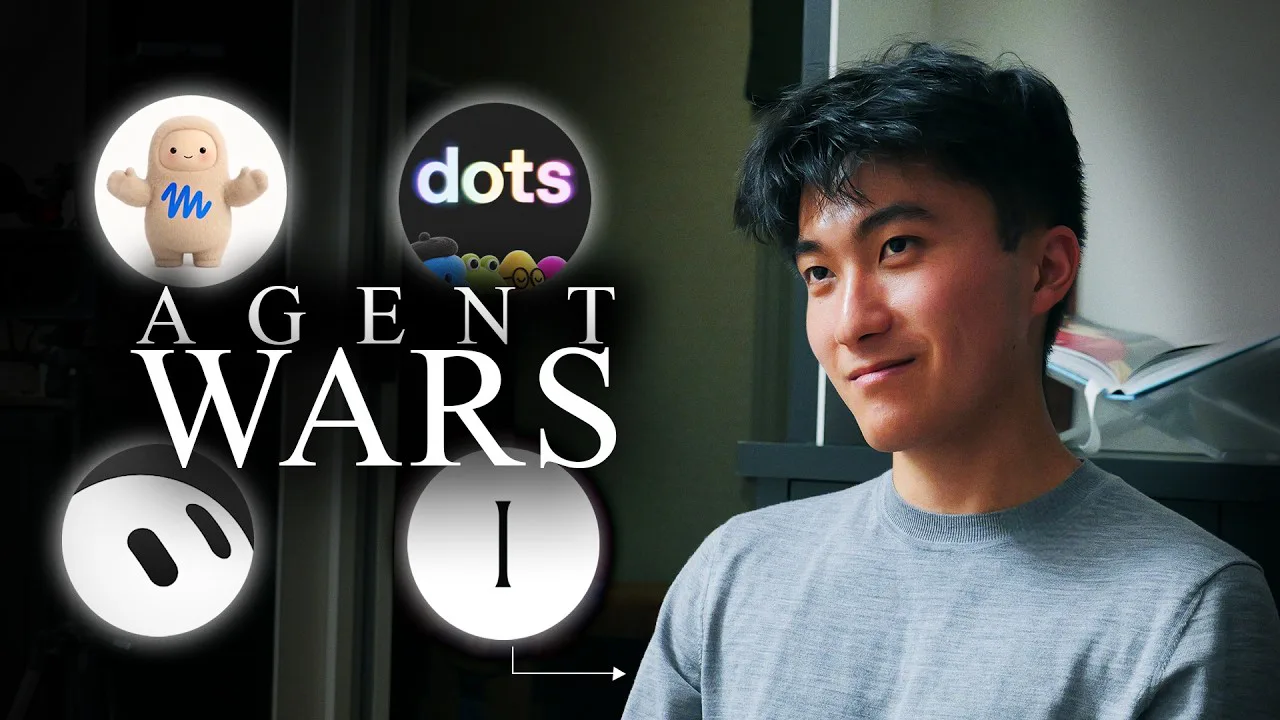
"The $10B AI Assistant Challenging Meta's Muse, Grok's Bots, and OpenAI's Dots." Image: Invest Like the Best, YouTube.
Shinn's numbers
$0 on marketing. Each user gets 5 invites, so every invite is a personal endorsement; invites have reportedly sold on eBay for about $300.
Daily user growth rose from 1–2% to 10–11%, roughly doubling every week. Shinn spends about 40% of his time on compute capacity planning.
Nearly $1B in annualized transaction volume, about half of it travel. That is spending that passes through Instinct, not revenue, and the take rate is undecided.
About 40% of users share a credit card within 3 weeks; users who connect a sensitive item retain at 80%.
Why it mattersInstinct's advantage is trust, not model quality. Shinn argues an agent should be judged by how well users can predict what it will do, not by how much it can do. That is the opposite of story 7, and likely why investors shrugged off Meta's Muse launch 20 days earlier.
Founder claims, unaudited. Every figure above comes from one interview. Issue 25 also reported that Instinct kept 36 Gmail messages after a user disconnected: revoking access is not deleting data.
Shopping agents start checking out. Shoppers aren't sure they want them to.#
This week's retail news was about agents completing purchases themselves, not just recommending products.
Rezolve Ai (Oct 9) demoed RezolvePay, in which Meta's Muse agent ordered a coffee for in-store pickup and the receipt named the agent that bought it. Rezolve says it works with any consumer agent.
Gladly (Oct 7) merged the sales bot and the support bot into one assistant. CEO Charlie Besecker: "Every brand I talk to is running two or more AI agents on its site… neither knows what the other is doing."
Newegg adopted Google's Universal Commerce Protocol, so shoppers can buy inside Gemini and AI Mode. German drugstore chain dm is building its own shopping agent, Albert Heijn plans to extend its Steijn assistant to grocery ordering, and TikTok launched a shopping assistant.
The trust gap
Commercetools' autumn radar finds willingness to let AI handle checkout drops to 8% at the payment step, though it rises when a trusted payment brand is involved. OpenAI's Instant Checkout is still paused, and Anthropic's retailer blueprints leave payment with the retailer's own checkout. Salesforce found 39% of Canadian shoppers used AI to shop in the past year, but only 11–12% started with it.
Local angle · Cincinnati
"Answers are becoming markets."
Cincinnati's Pete Blackshaw, former digital leader at P&G, Nestlé and Nielsen and now CEO of BrandRank.AI, just published The Answer Economy (Wiley). His argument: AI answers are the new purchase funnel, and a shopping agent that finds a private-label product with "80% of the value at 40% of the price" could erase the brand premium. His audits find smaller, more transparent brands often beat bigger ones in AI recommendations.
AI Ready Ohio is run by the Enterprise Technology Association and funded by JobsOhio. Image: AI Ready Ohio.
On October 8, Zack Huhn (Enterprise Technology Association, US AI Congress) announced five new tools on the AI Ready Ohio site. More than 3,300 Ohioans are already on the path to "AI Enabled" status.
Free AI Training Hub: 50+ free virtual courses from Google, NVIDIA, OpenAI, Anthropic, Microsoft, AWS, IBM and Ohio programs.
AI Accelerator for Ohio organizations, with eight tracks from startups and SMBs to government and nonprofits.
BLINK 2026 runs October 8–11 in downtown Cincinnati. Image: BLINK Cincinnati.
Cincinnati's Vurvey Labs is BLINK's first Official AI Partner and built Blinky, an AI companion on blinkcincinnati.com that helps visitors find installations, murals and artists and answers questions about schedules this weekend. Vurvey is also building a real-time BLINK Wayfinder. Blinky's persona is trained on BLINK's brand voice, and Vurvey says its models are built from consented interviews with real people, not scraped data. The Cincinnati Regional Chamber will co-author a case study afterward. Vurvey's clients include Unilever, Vans, Kenvue and JPMorgan Chase. No independent review of Blinky yet, so try it this weekend.
Cincinnati is #3 in the world for VC growth
J.B. Kropp, CEO of Cintrifuse, reports that PitchBook's 2026 Global VC Ecosystem Rankings put Cincinnati third globally for venture-capital growth, behind only Austin and San Francisco, measured on investment, exits and fundraising over six years. It is not an AI ranking, but AI now takes most US venture money (about 87.5% of the record US total, per PitchBook data reported in August), so a fast-growing VC scene is increasingly an AI scene. Separately, Fast Company in September named UC's 1819 Innovation Hub No. 23 on its Best Workplaces for Innovators list, alongside Anthropic, with UC No. 1 among educational institutions. Its Venture Lab has helped fund nearly 60 startups that have raised more than $70M.
Sources
Carl Fraik, Cincinnati AI Builders Forum, LinkedIn post, October 9, 2026
University of Cincinnati, LinkedIn post, September 10, 2026 (Fast Company Best Workplaces for Innovators)
13 · TipsAll users · Developers
Seven Claude tips we haven't run before. Each one uses something that shipped this week.#
We checked each tip against every past issue of The AI Enthusiast and our workshop decks; none has run here before. Tips 1 to 3 are for everyone. Tips 4 to 7 are for Claude Code users. The mod-building tips are in the feature (story 1).
Tip 1 · Google Sheets
Select the range before you ask.
The Claude sidebar in Sheets reads your current selection. Highlight the cells first, then ask for a pivot table, chart or cleanup, and Claude works on that range instead of guessing. Leave the default "Ask before edits" on, so each change arrives as a card you approve.
Try this: select a messy column of dates and ask, "Normalize these to YYYY-MM-DD and flag any you couldn't parse."
Tip 2 · Google Slides
Let Claude check your deck for layout problems.
Claude for Slides checks for overlapping elements and text running off the slide after it adds slides. Run that check on a deck you built by hand before you present.
Check every slide for overlapping elements, text running off the slide and anything too small to read. List them; don't fix anything yet.
Tip 3 · Plans
If you pay for Max or Team, look for your free API credits.
Since October 7, Max and Team plans include monthly API credits for building on the Claude Platform. If you've wanted to try a small automation but didn't want to add a card, you can now prototype without extra spending.
Tip 4 · Claude Code · Safety
Make safety hooks fail closed.
By default, a hook that crashes or times out lets the action through. Since v2.1.295 you can add "onFailure": "block" to any command or HTTP hook that protects something, such as secret scanning, deploy guards or path restrictions, so a broken hook stops the action instead of silently allowing it.
Tip 5 · Claude Code · Cost
Set effort per sub-agent.
The Agent tool now takes an effort parameter (v2.1.292). Send file-finding and grep-style scouting to a sub-agent at low effort, and keep high for the agent that writes the fix. The bill drops without the work getting worse.
Spawn a low-effort sub-agent to list every file that imports auth/session. I'll do the refactor at high effort.
Tip 6 · Claude Code
Get back a prompt you cleared by accident.
If you pressed Ctrl+C on a long draft prompt, press ↑ (Up) and it comes back (v2.1.288).
Tip 7 · Claude Code
Find background sessions by part of their name.
claude attach <name> and claude logs <name> accept part of a session name (v2.1.290), so claude logs refac finds "refactor-billing" without looking up an ID.