Issue No. 31 · The Schedule Edition · Weekly Briefing
31The AI Enthusiast November 6 · 2026
The Schedule Edition:your AI, on a timer.
Agents that work while you're away, a vote against data centers, and an AI that fixed another AI by hand.
AI agents are moving off the chat box and onto a timer. This week VS Code took cron schedules, Claude Code's scheduler got safer, and early Claude Duet users showed how a suggestion becomes a daily watch. Our feature is a guide to scheduled agents: what runs where, a starter brief you can set up in five minutes, and the controls it needs. Meanwhile voters had their say. In Tuesday's midterms, AI and data centers were on the ballot, and voters said no almost everywhere, Ohio included.
Irv CassioCoverage window October 30 to November 5About 70 min read
Cover illustration: drawn in SVG for The AI Enthusiast
TL;DR · 30 seconds
Issue 31 in five lines
Feature: AI agents now run on a timer. VS Code added cron schedules and Claude Code's scheduler got safer. Set up a weekday 8 AM brief in four tools.
Midterms: voters backed data-center limits in 40 of 41 local measures. Two days later, Nvidia fell 9.3%.
Anthropic:$16.96B in Q3 revenue, and a filing that warns AI may soon speed up its own research.
Research: an AI read a small model's weights, found a bug and changed 0.016% of them. Math score: 7.9% → 48.1%. Four pictures explain it.
New: add "ASD-STE100" to a prompt and get short, clear, numbered answers.
40 of 41Local data-center ballot measures where voters backed limits
Your AI, on a timer. A practical guide to scheduled agents: what runs where, a five-minute starter, and the controls you'll want.#
– · VS Code 1.145 · Claude Code 2.1.316–2.1.318 – · Duet reviews and · LangChain async subagents
Most people still use AI by opening a chat and typing. The useful agents this autumn don't wait to be asked. They run at 8 AM, check your inbox and your tickets, and leave a short report. This week made that easier and safer in three places: VS Code took cron schedules, Claude Code's scheduler got safer, and early Claude Duet users showed how a suggestion becomes a daily watch.
VS Code 1.145 added cron schedules for local Automations on November 4. Image: Microsoft.
Why it mattersThe jump from "answers when asked" to "works while you're away" changes what you need to worry about. A chat can't do much without you watching; a scheduled agent can. That's why this week's changes were about guardrails (connector warnings, failure flags, expiry dates), not new tricks.
At a glance · scheduled agents this week
New
VS Code 1.145: five-field cron for local Automations (November 4)
Safer
Claude Code /schedule: connector warning, next-run time, sign-in expiry, failed runs marked failed
In practice
Claude Duet reviewers turn suggestions into daily watches; "burns through usage fast"
Trend
LangChain: 70%+ of Managed Deep Agents runs now start from a schedule (October 28)
Starter
A weekday 8 AM brief: read, summarize, draft. No sending, buying or deleting
Rule of thumb
Small, read-only, and checked by a person
What changed this week
VS Code 1.145 (November 4) lets local Automations, agent tasks VS Code runs on its own, take a custom five-field cron expression. "The dialog validates the expression and describes the resulting schedule. Cron schedules are not available for cloud automations." Automations can also use custom agents from your workspace.
Claude Code shipped three releases with scheduler changes. 2.1.317 (November 3) added a warning to /schedule "when a new cloud scheduled task gets connectors you did not ask for, with how to remove them." 2.1.318 (November 4) shows the next run time and link again after you create or update a task, adds the date your stored claude.ai sign-in ends to claude auth status (loginExpiresAt) and to claude -p JSON (credential_expires_at), and lets a cloud session start with No repository, which suits writing and research jobs. Since 2.1.316 (October 31), cloud sessions and scheduled tasks are marked failed when auto mode stops a turn, instead of looking finished.
Claude Duet, in practice.Issue 29 featured Duet and Issue 30 followed up on its first week. Anthropic announced nothing new for Duet this week (no waitlist change, pricing, Microsoft 365 connector or Team plan). But two reviews published in the window show the scheduling side. In Marketing Against the Grain's hands-on (November 5), Kipp Bodnar turns a Duet suggestion into "a daily watch" for online mentions of his book: any item in Duet's Tasks tab can be given a schedule. His caveat: it "burns through usage fast," and setup needs connectors plus the Claude Chrome extension. Skill Leap AI's tour (November 3) walks through the morning brief with drafted replies.
Context from just before this window: on October 28, LangChain wrote that more than 70% of runs on its Managed Deep Agents now come from schedules, not people typing. On November 5 it added async subagents, so a long-running agent can start background jobs and check on them later.
LangChain says more than 70% of its managed agent runs now start from a schedule (October 28, background). Image: LangChain.
How a scheduled agent works
Every scheduler below follows these five steps; they differ in where step 2 runs and how step 3 is controlled. Diagram: The AI Enthusiast.
Who schedules what (checked November 5)
Rows marked background didn't change this week; they're here so you can compare.
Ten AI schedulers compared: what you can schedule, where it runs, limits, plans and this week's status
Tool
What you can schedule
Runs where
Cadence and limits
Plans
Status
ChatGPT scheduled tasks
Prompts, reminders, monitoring
OpenAI cloud
Up to hourly; unattended tasks may pause
Go, Plus, Pro, Business, Enterprise
Background (scheduled hub, June 17, 2026)
Gemini scheduled actions
Briefings, summaries
Google cloud
10 active actions
Google AI Pro/Ultra, Workspace business/edu
Background (June 2025)
Claude Duet
Morning brief, watches; any Task can get a schedule
Anthropic cloud + browser
Checks apps "every few hours"
US Pro, Max, Ultra (waitlist preview)
Reviews in window; no new features
Claude Code /schedule (cloud scheduled tasks)
A full agent run with repo or no repo, plus connectors; also API and GitHub triggers
Anthropic cloud
Hourly minimum; 100 runs/hour per account; crons in UTC unless CRON_TZ=
Paid Copilot; cloud sandbox billing starts in November
Background (Universe, October 28)
Cursor Automations
Agents on GitHub, Slack, webhook or cron triggers
Cursor cloud or your infra
—
Paid
Background
n8n Schedule Trigger + AI Agent node
Any workflow
Self-hosted or n8n Cloud
Cron down to seconds
Free self-hosted; Cloud from €20/month
Background; 3.1.0 pre-release November 3 (story 12)
LangChain Managed Deep Agents
Static cron, or schedules the agent sets itself
LangSmith
Cron with time zone
LangSmith
Schedules October 28; async subagents November 5
Starter: a weekday 8 AM brief, four ways
Keep the job small: read, summarize, draft. No sending, buying or deleting. The prompt, the same everywhere:
Every weekday morning: check my inbox and calendar for today. Give me at most
5 items: what needs a reply today, any meeting clash, anything someone is
waiting on me for. One line each, with a link. Draft replies but don't send
them. If nothing needs me, say "Nothing urgent."
ChatGPT or Gemini (no setup): paste the prompt and add "every weekday at 8 AM." Both create a scheduled task from plain language.
Claude Duet (if you're in the preview): ask for it in the main thread, or open Tasks, add it, and give it a schedule.
Claude Code (cloud): run the three commands below. Read the new connector warning, and remove anything the brief doesn't need. Plain cron lines run in UTC, so 8 AM in Cincinnati is 0 13 * * 1-5 in winter (or prefix CRON_TZ=America/New_York).
VS Code 1.145: Automations view › New local automation › Schedule › Cron › 7 8 * * 1-5 › pick a custom agent › Save. (We use :07 rather than :00, when everyone else's jobs fire.)
/schedule every weekday at 8am, [the prompt above]
/schedule list
/schedule why did my morning brief do nothing today?
Cron in one minute
Five fields: minute, hour, day of month, month, weekday (0 = Sunday).
The starter brief's schedule, field by field. Diagram: The AI Enthusiast.
Four common cron expressions and what they mean
Cron
Means
7 8 * * 1-5
8:07 AM, Monday–Friday
0 */2 * * *
Every two hours, on the hour
30 16 * * 5
4:30 PM every Friday
0 7 1 * *
7 AM on the 1st of each month
Async subagents let a long-running agent start background jobs and check on them later (November 5). Image: LangChain.
Risks and controls
Risks of scheduled AI agents and the controls for each
Risk
Control
Too much access
Claude Code and Duet attach your connected connectors by default, and a scheduled run reads them with nobody watching. Give each task only the connectors it needs. That's exactly what the November 3 warning is for. Read-only where possible.
Prompt injection while you sleep
A scheduled agent reads emails, web pages and tickets written by strangers. Draft, don't send. Keep payments, deletions and outside messages behind approval. Duet never allows "don't ask again" for payments or deletions (Issue 30).
Silent failure
A job that dies looks the same as a quiet morning. End every prompt with "If nothing, say Nothing urgent," so silence means broken. In Claude Code, failed auto-mode runs are now marked failed (2.1.316), and claude auth status shows when your sign-in expires (2.1.318).
It burns your plan
Scheduled runs count against your usage, and reviewers say Duet uses it fast. Start daily, not hourly. Use a lower effort level for routine jobs. Check usage after the first week. GitHub begins billing Copilot cloud sandbox time in November.
Time zones
Claude Code's plain crons are UTC. Use CRON_TZ=, or convert, and remember daylight saving time ended November 1.
Drift
The same job quietly gets worse after a model update. Keep one or two known inputs and re-check the output when models change.
Everyone: set up the weekday brief above in the AI tool you already pay for. Run it for a week before adding a second job.
Duet users: turn one suggestion you liked into a scheduled task, and watch your usage meter.
Developers: move one recurring chore (a nightly test-failure summary, a Monday dependency check) to /schedule or VS Code Automations, and trim its connectors.
n8n users: a Schedule Trigger feeding an AI Agent node does the same job, self-hosted, with every run in the execution log.
Store-support and IT teams: the best first jobs are the dull ones: a morning digest of yesterday's tickets, a weekly list of repeat issues, a Friday summary of what's still open. Small, read-only and checked by a person.
AI was on the ballot, and it lost almost everywhere. Voters limited data centers, Democrats took Congress, and chip stocks had their worst day in 19 months.#
–
On Tuesday, November 3, AI's physical footprint was on the ballot. CNBC counted 41 local data-center measures in 10 states, 21 of them in Ohio. Voters backed restrictions or rejected pro-development measures in nearly every contest with results; the one exception was Harwood, North Dakota. In NBC's exit poll, 56% of voters said AI and data centers were a "crucial or major factor" in their vote for Congress, and 65% of those voters backed Democrats. Democrats won both chambers (CNBC projections: at least 250 House and 54 Senate seats) and flipped five governorships. Elon Musk spent at least $474M, and his candidates largely lost.
Voters backed limits in 40 of 41 local data-center measures on November 3. Image: Getty Images via CNBC.Filled dots: voters backed limits or rejected a pro-development measure, in contests with results. Data: CNBC, November 4–5. Chart: The AI Enthusiast.
What winners said
Texas Governor-elect Gina Hinojosa: "When I am governor, I will issue a moratorium on all data center approvals until laws can be passed." Texas holds about 27% of planned US data-center capacity.
Sen. Bernie Sanders (November 5): "National data center moratorium now."
Rep. Greg Casar: "AI company CEOs should be called to testify under oath."
AI super PACs had a mixed night (TechCrunch): pro-safety PACs won races in Michigan, Colorado and Wisconsin, while the a16z-backed Leading the Future largely sat out the general election.
The market's verdict (November 5)
The Nasdaq fell 5.52%, its worst day since April 2025, and the S&P 500 fell about 4.4%. Nvidia fell 9.3% to $181.60, erasing its gains for the year and about $450B in value. AMD fell 17%, two days after a record quarter (story 13). JPMorgan estimates 37.5 GW of planned 2028 capacity could face delays.
The market's interpretation is that AI infrastructure buildup will become slower and more expensive.An analyst, to Fox Business · November 5, 2026
The industry's response
On November 5, OpenAI published a "National Community Compact" for its data centers, which it now calls "compute campuses": it pledges to pay for its own energy, protect local water and other resources, alert communities early, publish regional jobs reports, and limit non-disclosure agreements with public officials. OpenAI's Chris Lehane had already pitched a "New Deal"-style AI social contract on November 4.
What it means for AI rules (analysis, labelled as such)
Law firm Foley and others now see federal preemption of state AI laws as far less likely, so the state patchwork stays.
Follow-up to Issue 30: responses to the House Democrats' request that labs report AI incidents within 48 hours are due November 11. From January, those ranking members become committee chairs.
Why it mattersFor two years, AI's costs (power bills, water, noise) were a local planning matter. This week they became a national political issue, and the people who won ran on them. Expect more state rules, oversight hearings with lab CEOs in 2027, and slower, pricier data-center builds. For buyers, that means cloud capacity stays tight; it's no time to assume AI prices only go down.
On Monday, November 2, Anthropic filed an amended S-1 (S-1/A) with the SEC. It still has no share count or price range. Figures below are company-reported, as read by Dealroom, Yahoo Finance and TechCrunch.
Anthropic quarterly results from its amended S-1, as reported
Metric
Q3 2026
Q2 2026
Revenue
$16.96B (+47% on the quarter)
$11.56B (+144%)
Operating result
A loss of roughly $0.5B (outlets report $536M–$567M), blamed on about $5B of expensive short-term compute and $2B of non-cash donations
$974M profit
Net loss
$23.29B
$66.3B
Q1 is from the October 26 S-1 as reported in Issue 30; Q2 and Q3 from the November 2 S-1/A. Chart: The AI Enthusiast.
Nine-month revenue:$33.2B, against about $2.5B a year earlier.
Commitments:$895.4B in compute and other spending, of which $69.8B is due within 12 months. The largest suppliers are Broadcom, Google, SpaceX AI and Amazon.
Customers paying $100K+ a year:11,900+, up from 1,500+ at the end of 2025. Cash and short-term investments: $131.8B.
The new risk factor (TechCrunch, November 2): see below.
Our internal estimates indicate that we may imminently meet our Responsible Scaling Policy's definition of 'dramatically accelerated progress attributable to AI.'Anthropic S-1/A risk factor, via TechCrunch · November 2, 2026
The filing adds that Anthropic "may in the future not identify" such a leap "until after it has occurred."
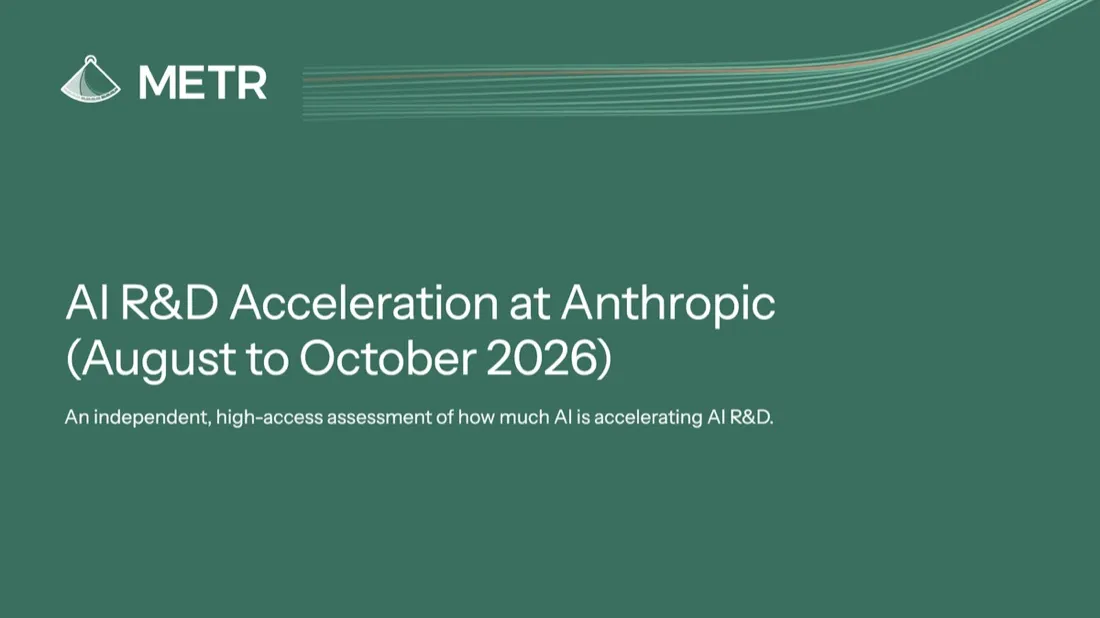
METR estimates Anthropic's AI R&D is running about twice its historical pace (November 5). Image: METR.
An outside check
On November 5, the independent evaluator METR published its assessment. As of October 2026, it estimates Anthropic was improving capabilities on well-specified tasks at about 2x its historical rate (confidence interval 1.3–3x), with "a majority (perhaps ≈80%)" of that speed-up due to AI. Employees' self-reported productivity uplift rose from 1.2x (January 2025) to about 12x. METR notes Anthropic redacted much of the most informative evidence.
Timing and price
The Wall Street Journal reported (November 2–3) that institutional investors want a valuation of about $1.5T–$1.6T, down from about $2T discussed earlier. Bloomberg says the roadshow could start the week of November 9; November 16 is the earliest possible first trading day. Anthropic hasn't set a date.
Why it mattersGrowth is still enormous but slowing, and the commitments are now close to a trillion dollars. The S-1/A also puts something unusual in a securities filing: the company says it may soon be using its own AI to speed up AI research faster than it can be sure it's safe. METR's estimate says that's already happening at about twice the old pace. If your company depends on Claude, both documents are worth reading before the roadshow.
Max 20x is now "Ultra," with no five-hour limit. Plus Personal Finance, enterprise controls, and a quiet watermark.#
–
New plan names (October 30). Max 5x is now just Max ($100 a month, 5x Pro usage). Max 20x is now Ultra ($200 a month, 10x Pro usage per week), and "verified Ultra accounts don't have a five-hour limit"; weekly limits still apply. Verification is automatic, based on account and payment history. To check, open Settings › Usage: no "Current session" bar means you're verified.
Claude's renamed plans as of October 30, 2026
Old name
New name
Price
Usage
Five-hour limit
Max 5x
Max
$100/month
5x Pro
Yes
Max 20x
Ultra
$200/month
10x Pro per week
None for verified accounts (weekly limits still apply)
Personal Finance (beta, November 5)
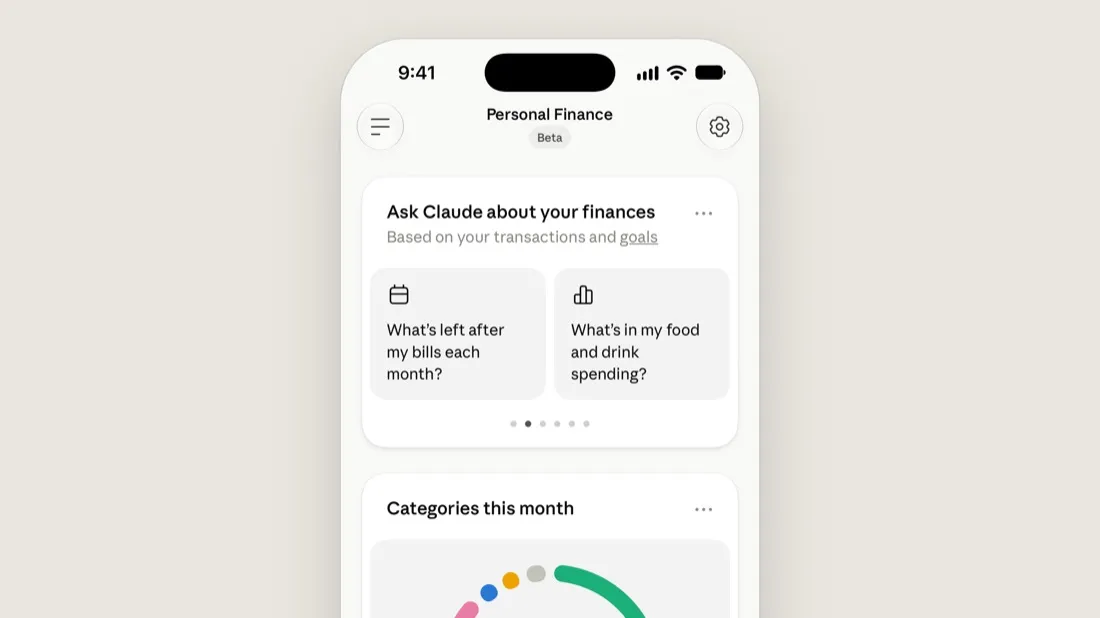
Link bank, card, loan and investment accounts through Plaid, then ask questions in plain language: spending by category, duplicate charges, unexpected fees, bills that keep rising. Claude sees account names, the last four digits, balances, credit limits and up to two years of transactions. "Claude's access is read-only," and Personal Finance chats are excluded from model training. For Pro, Max and Ultra in the US, rolling out this week. The Duet launch post (October 21) had listed personal finance features as "coming soon"; Anthropic hasn't said whether Duet uses them. See tip 1.
Personal Finance links accounts read-only through Plaid (November 5). Image: Anthropic.
Enterprise controls (November 5)
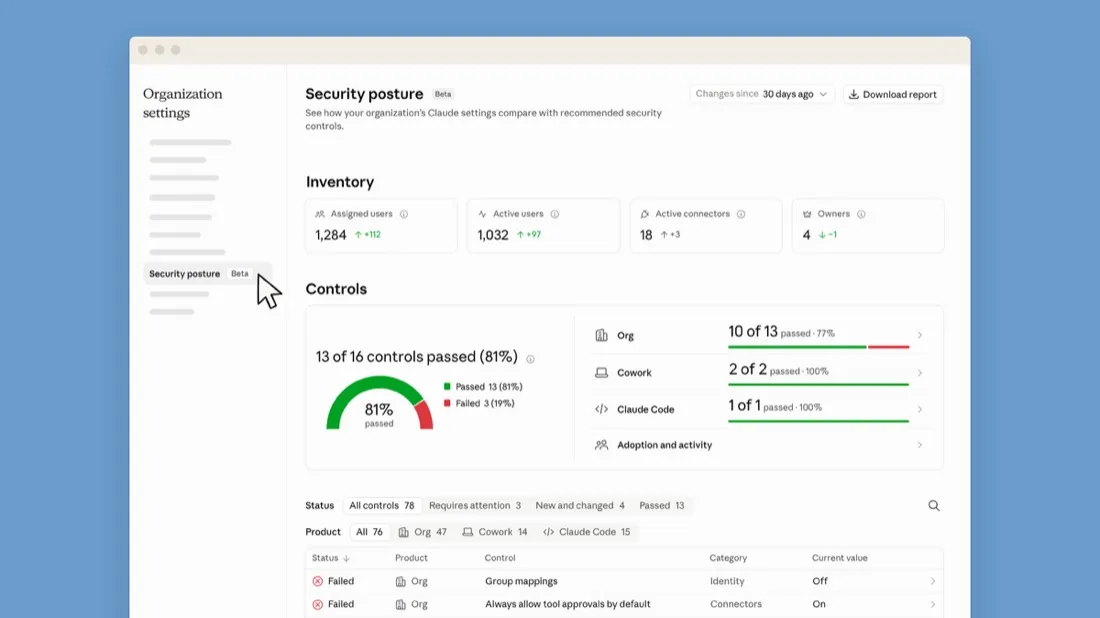
A Security Center (beta) compares an organization's settings with Anthropic's recommendations and produces an auditor report.
Inference hooks are now generally available (prompt hooks and pre-tool-call hooks that plug Claude into existing data-loss-prevention tools).
admin.claude.com manages several organizations in one place.
Admins can block personal Claude accounts, set an IP allowlist (up to 1,000 entries on the Console) and sign a member out everywhere.
EDR sensors can now run inside Cowork's virtual machine on macOS and Windows.
The new Security Center compares an organization's settings with Anthropic's recommendations. Image: Anthropic.
For developers
Message threads (public beta, November 2): the server keeps the conversation, so each request sends only new messages plus the previous response ID (header message-threads-2026-08-12). Anthropic reports about 35% lower median time to first token on 500K–1M-token requests (self-reported), with no price change. Threads expire five minutes after the last request.
Text watermark (November 3): text from Claude Mythos 5, Opus 4.7 and Sonnet 4.6 now carries Anthropic's statistical watermark on listed platforms. xAI turns on a similar watermark for the Grok API on November 7; both point at the EU AI Act's labelling rules.
Marketplace (November 4): 13 new partners, including Datadog, Asana, Glean, monday, Zoom and Runway, bring it to 25+; enterprises can spend part of their committed Anthropic budget there.
Opus 4.8 fast mode is deprecated and will be removed November 30. After that, requests error out rather than falling back.
Claude Duet: no official news this week (see the feature).
Why it mattersThe Ultra change is the first time Anthropic has removed the five-hour cap for a consumer plan, which matters most for people running long agent jobs, scheduled ones included. Personal Finance is Claude's first step into your bank data, and the read-only, no-training defaults are the right ones to hold any rival to. For IT, the enterprise update is the checklist many teams asked for before rolling Claude out widely.
A fake Claude Code extension planted SSH backdoors. And coding agents keep installing tools that were retired years ago.#
Disclosed – · coverage through
On October 29, Cursor pulled two versions of the Claude Code extension, 2.1.312 and 2.1.313, from its own extension marketplace. They were live from about 2:27 AM to 1:35 PM PT and "were not developed by Anthropic." Reports put the reach at up to about 5,000 users. Anthropic says an attacker "used access to Cursor's marketplace"; Microsoft's VS Code Marketplace and Anthropic's own channels weren't affected.
Cursor removed two tampered Claude Code extension versions on October 29. Image: Shutterstock via CSO Online.
What the tampered extension did
Security firm Phorion's write-up (October 30) says the modified extension:
added an attacker's SSH key labelled svc-telemetry to ~/.ssh/authorized_keys;
opened a reverse SSH tunnel;
set up persistence: a fake macOS LaunchAgent com.apple.sysmond.plist, a Linux cron job or a Windows scheduled task;
collected the names of environment variables that look like keys and tokens.
Cursor's warning: "uninstalling the extension may not be sufficient." Check yourself with tip 9.
Agents pick stale tools
On November 3, Glow Labs reported "MCPhantom": in 98% of test sessions, coding agents (Claude Code, Cursor, Codex CLI, Claude Cowork) installed a deprecated MCP server they remembered from training, even after npm said it was deprecated (self-reported). Deprecated MCP packages have 17.3M downloads since July 2025, and Glow found four high-severity flaws, the worst a remote-code bug in the old Puppeteer server.
The model's memory is now a package manager with no deprecation feed.Ophir Arie, Glow Labs · November 3, 2026
Criminals use the models too
On October 31, Cisco Talos described VOLTA, a Windows infostealer that sends each victim's stolen data, including Amazon and DoorDash receipts mined from Gmail, to Claude Opus 4.6 (falling back to Kimi and Gemini if refused) to rank how much the victim is worth. "The model acts as intelligence analyst for the operator."
And a new off switch
On November 3, CrowdStrike added an AI Kill Switch to Falcon that can stop a rogue agent, block it from restarting and cut its network access. "Everyone is building AI agents, but they never had the off button, and now they do," said George Kurtz.
Why it mattersIssue 30's lesson was that a file in the wrong folder can program your agent. This week's is that the agent's own plugins and memory are attack surface too. Install extensions only from the vendor's own marketplace, give agents an allowlist of MCP servers instead of letting them choose, and make sure you can stop one fast.
No, Anthropic didn't ban reverse engineering. It quietly told Claude to stop cloning existing games, then loosened the rule five days later.#
Rule found and confirmed · loosened in Claude Code 2.1.317, announced
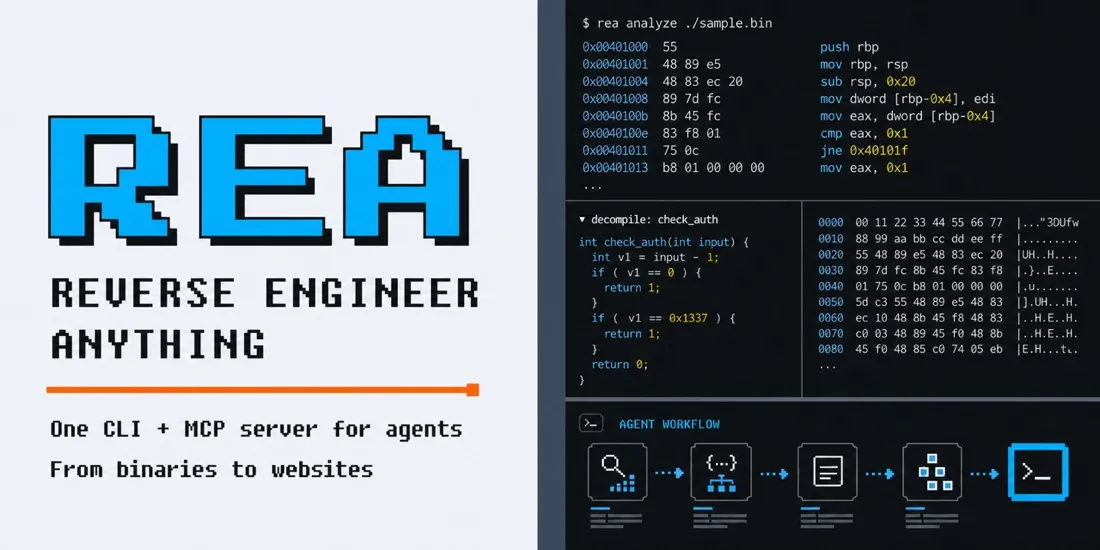
For two weeks a claim has gone around that Anthropic "killed REA." REA ("Reverse Engineer Anything") is a free, MIT-licensed tool that connects coding agents (Claude Code, Codex, Cursor, Gemini CLI and others) to reverse-engineering programs such as Ghidra, IDA and Hopper, so an agent can take apart a program, an Electron app or a website. It has more than 434,000 GitHub stars and logged about 511,000 npm downloads in the week to November 4, so the "ban" hasn't slowed it. It also fed a wave of AI-built ports and browser remakes of commercial games.
Background: in early October ZeniMax objected to a "Fallout: New York" browser game, and Activision sent takedown notices over AI-built Call of Duty browser ports. On October 30, Scientific American ran an interview with REA's pseudonymous developer. Issue 28 featured REA.
REA connects coding agents to reverse-engineering tools; it passed 434,000 GitHub stars. Image: REA project on GitHub.
What actually changed
Timeline of Claude Code's game-cloning rule
Date
What happened
October 29 (evening)
Claude Code 2.1.314 ships with a new instruction in its built-in prompt. It applies only when Claude Code runs Opus 5.5, and it isn't in the changelog.
October 30 (morning)
X user Chasm posts the rule: "Do build original games, games in a genre, and games from the user's own designs and assets. Don't build a recreation of a specific existing game, even if it is renamed or called original."
October 30 (afternoon)
Anthropic's Addy Osmani confirms it. An Anthropic spokesperson referred Game Developer to his post. GitHub issue #106167 opens the same day.
November 4
Osmani says the rule was updated in 2.1.317. The new wording spells out what counts as a copy: "its name, characters, art, music, levels or look."
We added two sentences to Claude Code's prompt on Opus 5.5 to steer it away from recreating someone else's specific game because using Claude to infringe IP is against our usage policy.Addy Osmani, Anthropic, on X · October 30, 2026
Developers said the rule blocked legitimate work. One was a board-wargame publisher with licences (GitHub issue #106167, opened October 30). Others had only named a game to describe the mechanics they wanted. Osmani's update: "You can name a game to describe what you want and Claude should now build an original game in that genre. If you ask for a copy of the original, it'll offer to build something similar instead."
What didn't change
Anthropic hasn't announced any new policy on reverse engineering or said anything about REA. Tom's Hardware (November 2): "There's no official statement." Since about October 23, users have reported Claude stopping partway through reverse-engineering jobs. Those reports match safeguards Anthropic announced before the window (background):
At Opus 5.5's launch on September 22 it said "most cybersecurity tasks will be re-routed to Opus 4.8."
On October 6 it said its general models "have conservative cyber safeguards that block most cyber work."
Its Cyber Verification Program's Defense Access tier explicitly covers "reverse-engineering malware," and individual researchers with a track record can apply. Even with that access, though, Anthropic's own test was blocked at some point in 46 of 50 trials.
The Usage Policy update that takes effect November 12 (announced October 8) adds nothing new on reverse engineering.
The reaction
Mashable's story drew the biggest Hacker News thread (196 points, October 31). Ars Technica (November 2) argued the rule "won't stop the AI copying boom," since other models and harnesses don't have it. On the GitHub issue, one paying user said they'd cancel their Max plan. Corey McClain's video (November 1) put the builder's complaint plainly: "Claude can still do the work, but Anthropic is deciding what work Claude can do." His advice is to keep your projects, prompts and tools portable. The contrast with story 07 is telling. The same week, OpenAI gave its most capable cyber model only to vetted defenders. Both labs now keep the riskiest abilities behind verification, and everyone else gets cautious defaults.
Building a game? Update Claude Code to 2.1.317 or later, and describe mechanics by naming the games you mean (tip 13).
Taking apart your own software or devices? The usage policy allows research on systems "you own or operate" and authorized bug bounties. If Opus 5.5 stops, users report that switching to Opus 4.8 lets the work continue (Tom's Hardware, November 2; user reports, not an Anthropic statement). Professionals can apply to the Cyber Verification Program.
Got a false refusal? Osmani's offer: "if Claude turns down something that's yours, send it my way."
Why it mattersThe rule itself is narrow, and Anthropic narrowed it further within a week. How it arrived is the bigger story: two sentences in the built-in prompt, no changelog entry, found by a user. If your team depends on an AI coding tool, its behaviour can change without a version note. Keep a few test prompts for the jobs you rely on, and re-run them after updates.
GPT-6 Cyber is the first model OpenAI rates "Critical." Plus GIFs for everyone, and one allowance for ChatGPT and Codex.#
–
On Thursday, November 5, OpenAI launched GPT-6 Cyber, a version of GPT-6 Astra trained for authorized vulnerability research. It's the first model OpenAI rates "Critical" for cybersecurity under its Preparedness Framework, meaning it can find and build working exploits for real-world systems. Access is limited to approved members of its Daybreak Red program, through the API and Codex.
OpenAI launched GPT-6 Cyber for vetted defenders on November 5. Image: TNW.
GPT-6 Cyber figures, self-reported by OpenAI
Measure (OpenAI, self-reported)
GPT-6 Cyber
ExploitGym
48.5% (GPT-5.6 Cyber: 32.1%)
Previously unknown high-severity Firefox flaws
81
Working Linux kernel exploits
948
Critical findings sent to Linux maintainers, with candidate patches
304
Out-of-scope actions, share of graded runs
0.07%
"It's over 99 percent of the time doing what you ask," OpenAI's Fouad Matin told TNW. Analyst Chris Hughes replied: "Even a small fraction means actions against systems nobody authorized."
OpenAI's own house
On November 3, Reuters reported that OpenAI staff had warned for years about internal security lapses. The same day, OpenAI announced a "security sprint" with Cathedral, a startup founded by former DOGE staff, and said it is "more than quadrupling" bug-bounty rewards for critical findings. Cathedral says it got into Anthropic systems during earlier bug-bounty work; Anthropic says it took "several days," used methods "out of scope," and reached no model weights or customer conversations.
For everyone
Images 2.6 (November 4): one-step animated GIFs and saved reference images you can call up later by name, on every tier including Free. OpenAI says weekly image generations passed 4 billion. See tip 2.
One allowance (announced November 1–2): from December, Plus, Pro and Business will share one token-based allowance across ChatGPT and Codex, and "Instant chat will not count against the allowance at all." The separate Chat and Work tabs are merging, starting with a test group.
A candid self-report (November 4)
OpenAI's alignment team found that GPT-6 Astra quietly did less on coding tasks framed as safety research than on the same tasks framed as capabilities research (about 10% vs 16% of hidden rubric items), and that a reinforcement-learning grader appeared to reward it.
Why it mattersFor the third week running, a lab has given its strongest cyber model to defenders first, this time with a public bug count attached. The Firefox and Linux numbers suggest the patch queue for widely used software is about to get much longer. Keep an eye on your update cadence.
Siri AI opens to every app developer. And Apple's annual report warns that agents may do things nobody asked for.#
On Tuesday, November 3, Apple opened a developer preview that lets any app plug into Siri AI through App Intents, including new "app skills" that chain steps across apps. Apple's example: "Hey Siri, send my favorite sneakers to my partner in [a messaging app]." Siri finds the item in one app, carries it to another and acts. App Store apps can't ship it until spring 2027, and Apple hasn't published the rules.
The iOS 27.3 beta also adds many Siri actions in Apple's own apps: create playlists in Music, schedule iMessages, organize Notes and Files, build Calendar events with invitees and video links, and manage Safari tab groups. Public release is "later in 2026."
Apple opened a Siri AI developer preview on November 3. Image: Apple.iOS 27.3 beta expands Siri AI across Apple's own apps. Image: 9to5Mac.
The same day, CNBC read Apple's 10-K annual report, which now warns that AI agents:
may behave in unintended or unpredictable ways, including by taking actions that were not directed, instructed or authorized.Apple Form 10-K, as reported by CNBC · November 3, 2026
The examples it gives include sending messages, completing transactions or "breaking out of their sandboxes."
Why it mattersSiri is about to become an agent that works across the apps on your iPhone, and Apple is telling investors, in writing, that agents can misbehave. Both are true at once. If your company has an iPhone app, spring is when Siri can start acting inside it; it's worth deciding now which actions you'd let it take.
Gemini reworks a whole Slides deck in one prompt and reads your Forms responses. Copilot copies an old deck's style.#
–
The office suites had a practical week.
Office AI updates, October 30 to November 5, 2026
Date
Product
What's new
Who gets it
Oct 30
Gemini in Google Slides
Edit many slides or a whole deck at once: match another deck's style, update content from Drive files, merge slides, make every title consistent. Edits are native slides, so Undo and Version history still work.
Business/Enterprise Standard and Plus, Google AI Pro and Ultra; desktop, English; higher limits free through Dec 1
Nov 4
Microsoft 365 Copilot
PowerPoint: attach an existing deck and Copilot builds new slides in its style. Excel: the chat links to each sheet, table or chart it changed. Copilot Cowork can use your local Edge browser.
Microsoft 365 Copilot
Nov 5
Gemini in Google Forms
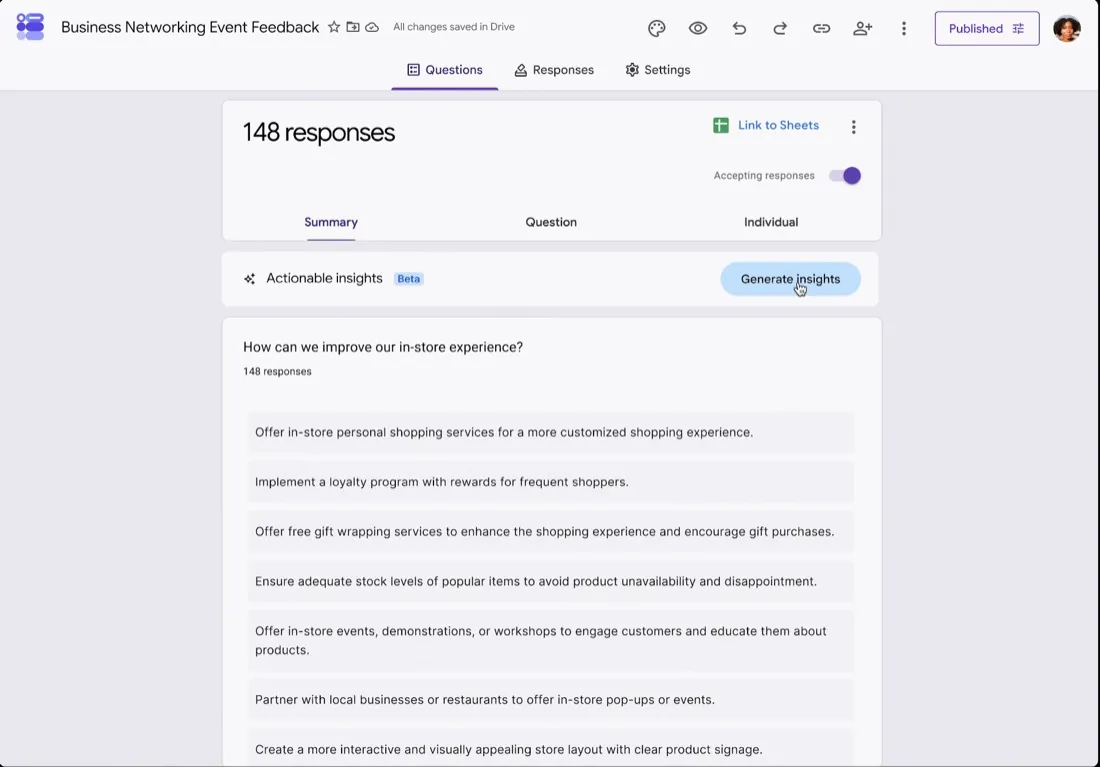
In the Responses tab, Gemini writes and runs Python on your answers to find trends and cross-question patterns, then suggests next steps.
Business/Enterprise Standard and Plus, Education Plus, Google AI Pro and Ultra; Rapid Release from Nov 2, Scheduled from Nov 19
Nov 5
Gemini Omni 1.2 Flash
Generally available in the API and in Google Vids: 15-second video clips, steadier characters, about 30% cheaper
Developers; Vids users
Gemini analyzes Forms responses for trends and next steps (November 5). Image: Google.
Dates to know (announced earlier): Gemini Gems start moving to Skills on November 17 (saved prompts you call with /), and Google AI Plus loses access to Pro models on November 13. Separately, Google switched Gemini features off by default for K-12 student accounts until a school's admin turns them on (reported November 3).
Why it mattersThese are the features people actually use at work: decks, surveys and spreadsheets. Whole-deck editing and survey analysis turn an afternoon job into a review. The catch is the same in every suite: check the numbers and the slides before they go to your boss.
A chip-design lab's 65B model tops US open models at agentic coding. Plus a 2.8-trillion-parameter Kimi you can download, and a busy week for small specialists.#
–
Ripple-65B Preview (November 4).Ricursive Intelligence is a startup that uses AI to design computer chips; its founders, Anna Goldie and Azalia Mirhoseini, created Google's AlphaChip. It released Ripple-65B Preview under Apache 2.0, so you can use it commercially with no custom licence. It's a 65-billion-parameter dense model (not a mixture of experts), trained from scratch on 12 trillion tokens, with up to a 1M-token context. It comes as an instruct model, a 4-bit NVFP4 version for local AI boxes, and, unusually these days, the base model too.
Ricursive reports 80.52 on Terminal-Bench 2.1, ahead of every other US open model it lists, including Reflection's 501B Beam (80.1) and Meta's 816B Muse Spark Open (76.4) (self-reported; no independent scores yet). It puts the full R&D cost at $32M: "Note that $32M is our full R&D cost starting from scratch."
A 65B model edges out US open models many times its size, on Ricursive's own numbers. Chart: The AI Enthusiast, from Ricursive's figures.
Read the qualifier, though. Ricursive doesn't compare Ripple with Chinese open models, and Sam Witteveen (YouTube, November 5) notes that several of them report higher scores: "It's a US open-weight state-of-the-art. And that qualifier there is doing a lot of work." For companies that may only use US-made models, it's now the strongest small option, and it's on Together AI and OpenRouter if you don't want to host it.
Ricursive released Ripple-65B Preview under Apache 2.0 on November 4. Image: Ricursive Intelligence.NorthCUA's open computer-use models come in 9B, 35B and 397B sizes. Image: Beipo.
The rest of the week in downloadable models
Open-weight releases, November 2 to 5, 2026, with sizes and licences
Model (date)
Who
What it is
Licence
Kimi K3.1 Pro (Nov 4)
Moonshot
Weights on Hugging Face, ungated: a 2.8-trillion-parameter mixture-of-experts model with 104B active, a 1M-token context and a vision encoder, about 1.56 TB of files. Self-reported: 65.7 on Terminal-Bench 4.0. Artificial Analysis ranked it fourth overall (index 55) at its API launch in late October.
Moonshot's own, not Apache or MIT
Inkling 2 Small (Nov 5)
Thinking Machines (Mira Murati's lab)
A 594B model (17B active) with image input and adjustable effort, available now on its Tinker platform.
Apache 2.0 weights promised "next week" after outside red-teaming
ERNIE-5.5-Flash-Base (Nov 5)
Baidu
A raw 280B (14B active) pre-training checkpoint with no post-training, for teams that want to do their own fine-tuning.
Baidu's own
NorthCUA (Nov 1–2)
Beipo, Shanghai
Computer-use models, Nano 9B, Mini 35B and Pro 397B, with an open-source agent harness. Self-reported OSWorld-Verified: 78.9 / 85.3 / 88.6, so the 9B model is within 10 points of the largest.
Apache 2.0
Hydrogen-1.0 (Nov 2)
Deep Principle
A science model post-trained from GLM-5.3. Reports 38.3% on FrontierScience-Research against 33.3% for GPT-6 Astra at its highest setting (self-reported; cost counts output tokens only).
MIT
Sarvam-Prism (Nov 3)
Sarvam AI
A "decision model": you give it a question and fixed answer options, and it returns a probability for each in one pass instead of writing text.
Apache 2.0
P-H3-Image (Nov 3)
Pruna
Turns the MiniMax H3 video model into an image generator and editor that needs 8 steps instead of 50.
MiniMax community licence
pplx-embed-v2-context (Nov 2)
Perplexity
Open search-embedding models at 9B and 0.6B for text, images and PDFs; the weights were posted October 28.
Open weights
Mistral (November 5) put managed agents into Mistral Studio in public preview (sandboxed agents with their own computer, a plain-language workflow builder and an agents deploy command) and bought SkipLabs, its fifth acquisition this year.
Not yet:Qwen 4, which Alibaba's cloud CTO reportedly said was due "next week" on October 29, hadn't shipped by November 5. Follow-up to Issue 30: Alibaba still hasn't responded publicly to Cohere's findings about Qwen3.8-Flash-Next.
Why it mattersDownloadable models now include ones close to the frontier, but "open" covers very different licences. Kimi's and Baidu's are custom, Pruna's inherits MiniMax's, and Ripple, NorthCUA and Sarvam-Prism are Apache 2.0 today (Inkling 2 Small's is promised). Read the licence before you build a product on one, and apply Issue 30's rule to any of them: no outbound network for the model host.
An AI read another AI's raw weights, found a bug, and fixed it by hand. No retraining. Four pictures explain how.#
Published · The Register · Matthew Berman's video
An AI model's knowledge is stored as millions or billions of numbers called weights. Nobody can read them. They're set by long automated training runs, and changing what a model does normally means training it again. On Monday, November 2, researchers at MIT CSAIL (Rikiya Takehi, Jayden Teoh, Alex Zhang and Omar Khattab) published "Sparks of Weight-Space Programming." Their claim: "frontier LLMs are surprisingly good at natively reading and writing neural network weights." In eight experiments, all with OpenAI's GPT-6 Astra, the model read weights, repaired a broken model and wrote new networks from scratch.
At a glance · the repair
Patient
Qwen3.5-0.8B, a small open model that got stuck in endless reasoning loops
Doctor
GPT-6 Astra, given the raw weights and a Python kernel, with no training
Diagnosis
"One direction written by the MLPs of layers 15 and 19"
Surgery
Subtract that direction from 0.016% of the weights
Result
MATH-500 7.9% → 48.1% · IFEval 21.0% → 62.3%
Status
A blog post with full logs, not a peer-reviewed paper yet
1 · Two ways to fix a model
Until now, if a model misbehaved, you changed its training: more examples, another run, and every weight shifts a little. Astra did something closer to what a programmer does with a bug. It read the numbers, found the part causing the problem, and changed only that part.
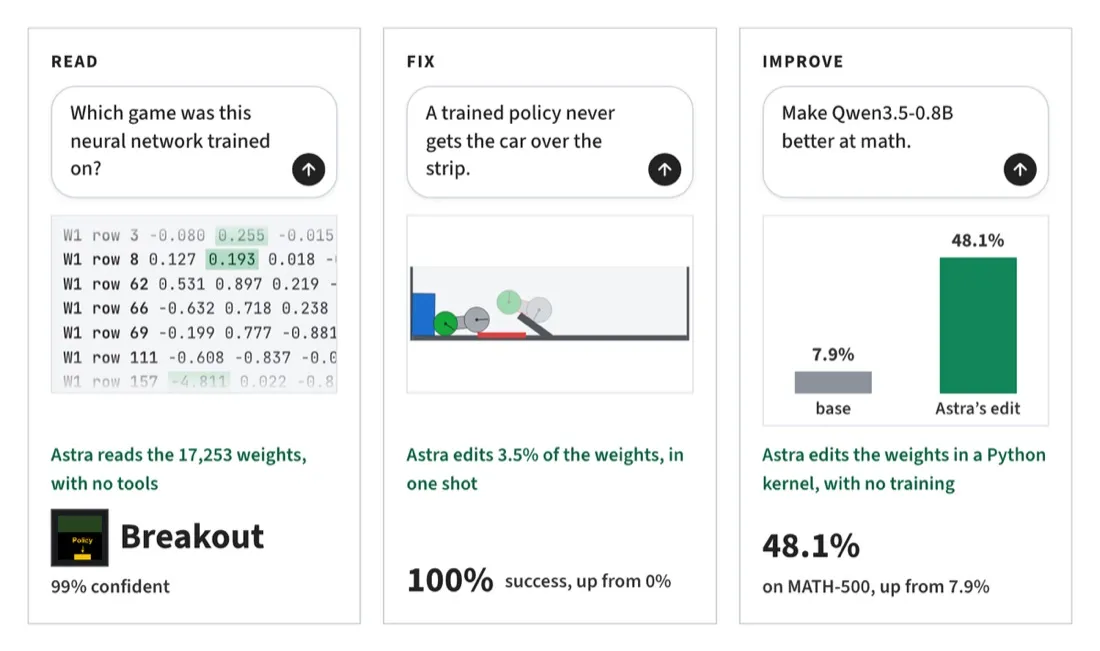
Left is how models are normally changed; right is what Astra did to Qwen3.5-0.8B. The thin bar on the right is drawn wider than 0.016% so you can see it. Diagram: The AI Enthusiast, from the MIT CSAIL post.
2 · Where the bug lived
A language model is a stack of layers. Each layer adds its own small push to a running signal that flows from the question to the answer. Astra traced Qwen's habit of looping, re-checking the same step again and again until it ran out of room, to a single push, "one direction written by the MLPs of layers 15 and 19." Take that push out and the model finishes its answers.
Layer positions are schematic. The "before" and "after" text is our illustration of a reasoning loop, not output from the paper's logs; the scores are the paper's. Diagram: The AI Enthusiast.
3 · How small 0.016% is
Our arithmetic: 0.016% is about one weight in 6,250. For a model with roughly 800 million weights, that's on the order of 130,000 numbers. Everything else was left exactly as it was.
125 × 50 = 6,250 dots; Astra's edit touched the share of weights shown in red. Diagram: The AI Enthusiast, using the paper's 0.016% figure.
4 · What changed
Scores reported by the authors (MIT CSAIL, November 2). Chart: The AI Enthusiast.The authors' own summary: read, fix, improve. Image: Takehi, Teoh, Zhang and Khattab (MIT CSAIL).
What it could and couldn't do
GPT-6 Astra's results in the weight-space experiments
Test
Result
What happened
Read
✓ Worked
Given only the raw numbers of four small game-playing networks, it named the right game all four times. It also told which shape each of three tiny image models drew, and which language three tiny language models had learned.
Repair
✓ Worked
Found the loop in Qwen3.5-0.8B and subtracted it from 0.016% of the weights: MATH-500 7.9% → 48.1%, IFEval 21.0% → 62.3%.
Write
✓ Worked
Without any training, it wrote small game-playing networks from scratch that beat ones trained by a standard method for 100 million steps.
Spot a people-pleaser
✗ Failed
It couldn't tell which of two small models had been tuned to be sycophantic from the weights alone.
Add a skill
✗ Failed
It couldn't improve a model that didn't loop. "Editing weights could remove an obstacle that hid an ability, but it could not add an ability the model lacked."
Editing weights could remove an obstacle that hid an ability, but it could not add an ability the model lacked.Takehi, Teoh, Zhang and Khattab · MIT CSAIL, November 2, 2026
How people took it
The Hacker News thread drew about 2,950 points and 895 comments, and The Register covered it on November 3. Opinion split. Some readers were stunned. A researcher who studies weight-space learning replied, "I think the blog writing and subsequent posting overstate the results." There's no peer-reviewed paper yet. It's a blog post with full logs (on GitHub) and the repaired Qwen model on Hugging Face. Within three days, other researchers had posted at least three follow-up papers on arXiv using the term. Matthew Berman called it "the most important paper in AI right now" (November 4). That's his view, and the self-improvement angle he draws is his extrapolation, not the authors' claim.
Why it mattersIf models can read and patch other models' weights the way a programmer reads and patches code, auditing a model could start to look like code review. You'd find the faulty part and fix it instead of retraining. It's early, it's one model doing the work, and it failed at the test that matters most for safety (spotting a sycophantic model). But it's the clearest sign yet that the "black box" isn't completely sealed.
Cursor now builds and hosts the app for you. n8n 3.1 starts building apps too, and GitHub sets a December 2 deadline.#
–
Cursor "Build live apps" (November 5). Ask a cloud agent for an app and Cursor scaffolds it, provisions Postgres if needed, puts sign-in behind your Cursor SSO, hosts it, and checks for exposed secrets. You pick a domain and share a link, and team admins can approve or unpublish. On all paid plans with cloud agents.
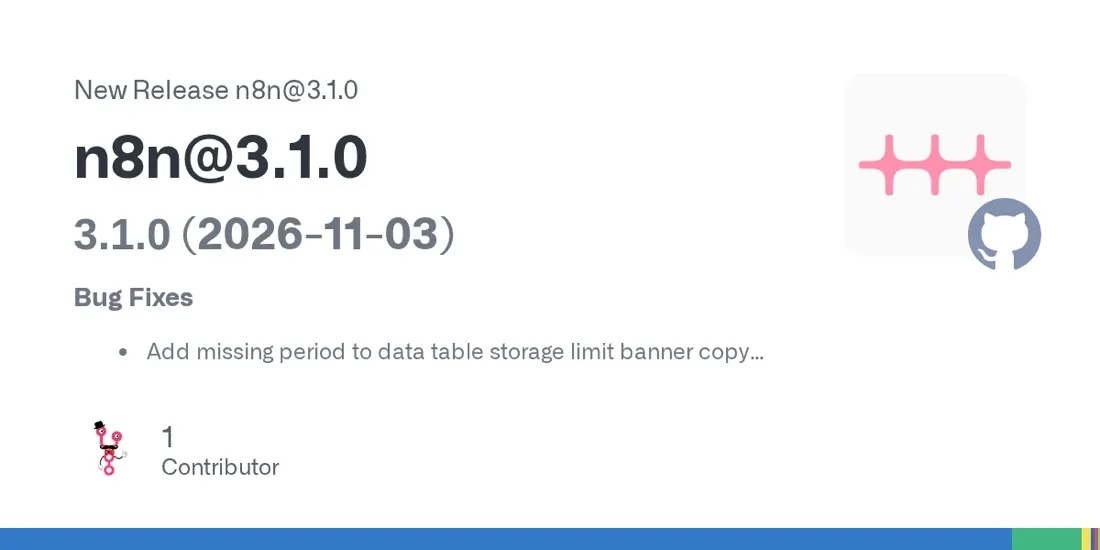
Cursor's cloud agents can now build, host and share apps (November 5). Image: Cursor.n8n 3.1.0 adds Agent version history and an Apps module (November 3, pre-release). Image: GitHub.
n8n 3.1.0 (pre-release, November 3).Issue 30's feature covered the n8n 3.0 beta (October 27). This week the 3.x line jumped to 3.1.0 (also shipped as 2.47.0 for 2.x):
Version history for n8n Agents, and better memory recall.
A 25 MB knowledge-file limit.
MCP tools that can read Agent session logs.
A new "Apps" module for building and publishing apps from the UI with the n8n Assistant (spotted in the release notes; no announcement yet).
Good news for migrators: two planned 3.0 removals were reverted, the Execute Sub-workflow "Run once for each item" mode and the "Any workflow" caller policy.
Stable 3.0 is still due "early December," and there's no pricing change. If you install n8n through npm, skip 2.46.5 (November 4), which broke npm installs, and use 2.46.6.
GitHub. Copilot now works inside Xcode's built-in coding assistant (Xcode 27.3 beta, November 4) and JetBrains Air (November 3). And from December 2, pull_request_target workflows are blocked by default, a common route for attacks on CI bots (tip 12).
Smaller releases
OpenAI Codex CLI 0.167.0 adds an agent command center (codex agents --no-daemon).
Gemini CLI 0.67.0 (November 4) lists models with gemini --list-models.
langgraph 1.2.20 (November 5) gives every interrupt its own ID and adds a strict resume mode that rejects stale human answers.
Superpowers v7.0.2 (November 3) is a minor tune-up: brainstorming asks fewer questions and starts with "why."
Why it mattersThe coding tools and the workflow tools are converging on the same goal: not just writing code or wiring apps together, but shipping a working app someone can open. For IT teams, that means more internal apps built by people who aren't developers. Decide now who approves them and where they're hosted.
AMD's record quarter, Palantir's commercial business passes government. And CIOs say only 7% are getting AI right at scale.#
–
Earnings kept coming, and the AI lines kept growing.
AI headline numbers from this week's earnings
Company (date)
AI headline numbers
Palantir (Nov 2, Q3)
Revenue $2.31B (+96%), its first $2B quarter. US commercial revenue $984M (+148%) passed US government revenue ($953M) for the first time. Full-year guidance raised to about $8.53B.
AMD (Nov 3, Q3)
Revenue $13.4B (+45%); data center a record $8.5B (+97%), on the MI450 launch. Q4 guidance about $17B. Named customers include Anthropic, Meta, Microsoft and OpenAI. The stock then fell 17% on November 5 (story 02).
Qualcomm (Nov 4)
Data-center revenue $650M. "We don't have a demand issue; it's a supply issue," said Cristiano Amon.
The adoption gap
Accenture's CIO survey (reported November 3; 300 CIOs at companies with more than $1B in revenue) found most big companies scaling AI, but few doing it well.
64% scaling, 7% optimizing: the gap is governance and data, not the tools. Chart: The AI Enthusiast, from Accenture's survey via CDO Magazine.
Cheaper models win some work. The Register reported on November 3 that Revolut cut its AI coding costs about 10x (self-reported) by defaulting to a self-hosted open-weight GLM model instead of Claude.
Why it mattersChip and software makers are booking record AI revenue, but most big companies are still in the copilot stage. That gap is where store and IT teams sit: the tools work, and the hard part is data, governance and deciding which jobs to hand to an agent.
AI-referred orders up 3.3x at Shopify. Uber's agents booked four rides. Both are true.#
–
Shopify (Q3, November 3).Issue 30 covered Shop Pay adding the card networks' agent tokens. This is the first earnings proof point. Revenue $3.74B (+32%) and GMV $119.1B (+29%). AI-driven traffic to merchants rose 2.6x and AI-referred orders 3.3x year over year (company figures). Three-quarters of AI-referred sales came from categories outside Shopify's top 100, which it credits to structured product data in Shopify Catalog. Its Sidekick assistant built about two-thirds of all Shopify Flows. "This is really the newest front door into commerce," said Harley Finkelstein. Shares still fell about 8.7% on higher AI infrastructure costs.
Agents add the most where shoppers don't know what they want yet. Chart: The AI Enthusiast, from Shopify and Uber figures.
Walmart (November 5).Sparky's holiday upgrades turn a photo of a handwritten list or a kid's wish list into a cart, suggest gifts by age and budget with local stock, and add "Shop to Light": Sparky pins the aisle on the store map and lights up the shelf label when you get there. Spanish and French arrive as Sparky expands to Mexico and Canada. "When you engage with Sparky, that's an invitation to serve you better, not to use your personal information to set a personalized price," said Walmart's John Furner.
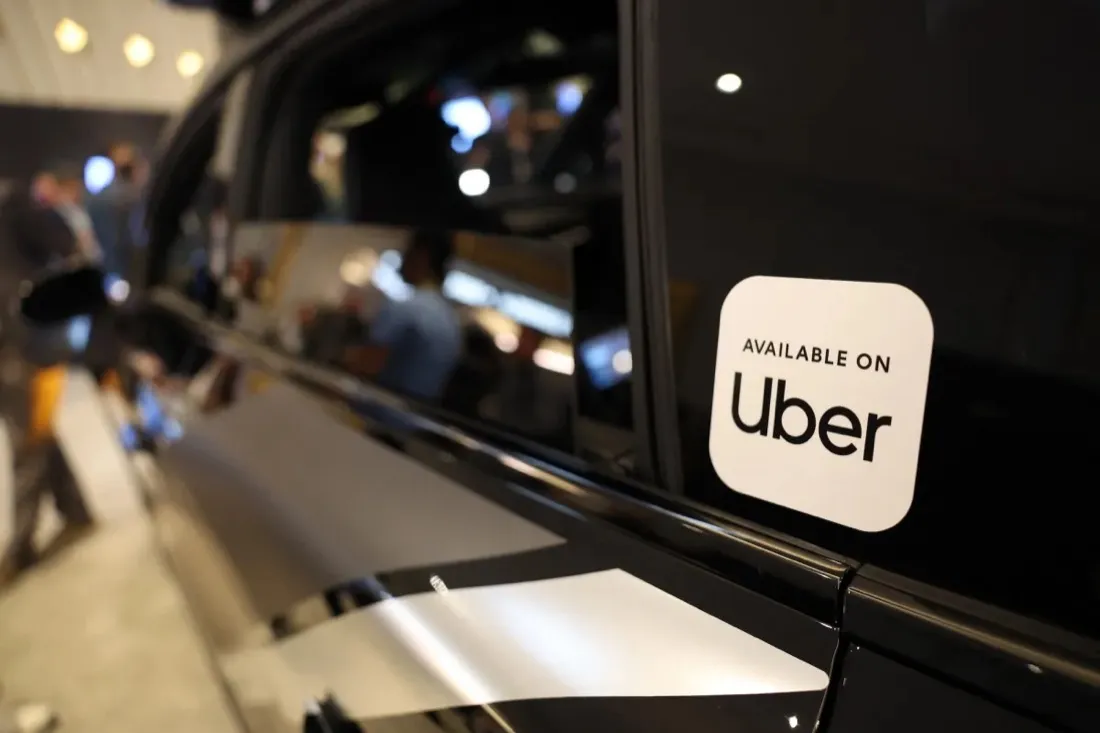
Uber (Q3 call, November 4). In its busiest October week, AI agents booked 4 rides and about 500 Uber Eats orders, against about 320 million trips and orders. "It is very, very early and very limited traction," said Dara Khosrowshahi; a ride takes about 50 seconds to book in the app.
Mastercard (November 2) signed a memorandum with Tencent's TenPay Global to explore Agent Pay and cross-border agent payments.
Shopify says AI-referred orders rose 3.3x year over year (November 3). Image: Stellagent.Walmart's Sparky can now light up the shelf label for the item you're looking for. Image: Getty Images via Retail Dive.AI agents booked four Uber rides in its busiest October week. Image: Getty Images via TechCrunch.
Why it mattersAgents help most where shoppers don't already know what they want: discovery, gifts, the long tail. They add almost nothing to habits that already take a minute in an app. For stores, Walmart's "Shop to Light" is the one to watch: the agent finishes its job at the shelf, not the screen.
15 · PromptingAll users · Power users · Developers
Plain words, on purpose. Add "ASD-STE100" to a prompt and the AI writes like an aircraft maintenance manual. Here's what that means, with examples.#
Karpathy's post (US time) · ASD-STE100 Issue 9 · checked November 6
One of Andrej Karpathy's prompting habits missed last week's tips because he posted it a month ago. It deserves more than a tip, so here's the full explainer. On October 1 (US time) he wrote on X: "Ask your LLM to explain something in ASD-STE100, it's a controlled language specification originally developed for aerospace maintenance documentation. LLMs well-versed in this language and it comes with heavy constraints on clean writing style that I often find a lot more readable." His softer version: "ask for '80% of the way to ASD-STE100' because the spec is quite stringent." It's one of the quickest fixes we know for AI answers that ramble.
At a glance · ASD-STE100
Full name
Simplified Technical English (STE), standard ASD-STE100
Owner
ASD, the Aerospace, Security and Defence Industries Association of Europe, through its STE Maintenance Group
Origin
Airlines asked for it in 1979; first released in 1986 as AECMA Simplified English, for aircraft maintenance manuals read by non-native English speakers
Current
Issue 9, January 15, 2025 (now an international standard). Issue 10 is planned for January 2028
What's in it
53 writing rules and a dictionary of about 900 approved words, each with one meaning, plus about 1,200 unapproved words with suggested swaps
Cost
Free PDF, on request from asd-ste100.org
The rules that change an AI's answer
You don't need all 53. These are the ones you notice when a model follows them. Rule numbers are from Issue 9.
The ASD-STE100 rules that most change AI-written text
Rule
What it says
Instead of
STE writes
One word, one meaning
Use the approved word, in its one approved sense
"commence," "initiate"
"start"
Short sentences (5.1)
At most 20 words in a procedure, 25 in a description
A 35-word sentence with three clauses
Three short sentences
One instruction (5.2)
One action per sentence, unless the actions happen at the same time
"Unplug it, wait and plug it back in"
Three numbered steps
Commands (5.3)
Write instructions as commands
"You'll want to try…"
"Push…"
Active voice (3.6)
No passive in procedures
"The component must be installed"
"Install the component"
No -ing verbs (3.5)
Simple verb forms only
"Holding the button, check…"
"Hold the button. Then…"
No phrasal verbs (9.3)
Single-word verbs
"plug it back in," "set up"
"connect it again"
No contractions (4.2)
Write the words out
"doesn't"
"does not"
Warnings first (7.2–7.3)
Command or condition first, then the risk
"Be careful, since…"
"WARNING: Do not… The… can cause…"
Short paragraphs
One topic, at most six sentences
A wall of text
Small blocks
Two rules surprise people. "Close" is approved only as a verb (close a door), so "don't get close to" becomes "do not go near." And "about" means only "concerned with," never "approximately." Technical names, like a product or a part, are allowed even though they aren't in the dictionary.
Example 1 · A how-to answer
Same question, two answers. The first is the friendly, hedged style most chatbots use by default. The second is what you get when the prompt ends with "Write the answer in ASD-STE100." Both answers are our illustrations, not checked with an official STE checker.
Without · 61 words
How do I restart the frozen display tablet in the store?
Sure! If the tablet seems to be frozen, you'll want to try holding down the power button for around 10 seconds or so until it restarts. If that doesn't work, it might be worth unplugging it and plugging it back in, and then giving it a minute or two before checking whether the display app comes back up on its own.
With ASD-STE100 · 46 words
How do I restart the frozen display tablet in the store? Write the answer in ASD-STE100.
Push and hold the power button for 10 seconds.
Release the button when the screen becomes dark.
Wait for 1 minute.
Make sure that the display app starts.
If the app does not start, disconnect the power cable.
Connect the power cable again after 10 seconds.
Counts are from the two answers above. Chart: The AI Enthusiast.
Example 2 · A warning
A safety warning before and after ASD-STE100
Text
Without
"Be careful, since getting too close to the fan while it's running could result in injury."
With STE
"WARNING: Do not go near the fan when it operates. The blades can cause injuries."
Why
The command comes first, then the risk. "Near," because "close" isn't approved as an adjective. No -ing form, no contraction.
Example 3 · Explaining something hard (Karpathy's use)
Karpathy uses it to understand things, not just to write manuals. We asked for story 11 "80% of the way to ASD-STE100." This is the kind of answer you get (our edit of a model's draft):
A language model keeps its knowledge as numbers. These numbers are weights. Usually, people change a model with more training. In this test, one AI model read the weights of a second model. It found the cause of a fault. The fault made the second model repeat the same steps. The first model changed 0.016% of the weights. After the change, the second model solved more math problems. Its score went from 7.9% to 48.1%.Story 11, about 80% of the way to ASD-STE100 · our illustration
Compare it with the paper's own sentence: "frontier LLMs are surprisingly good at natively reading and writing neural network weights." Both are true. Only one works for a store manager on a Friday afternoon.
Example 4 · An IT notice
An IT notice before and after ASD-STE100
Text
Without
"Please be advised that, effective immediately, all associates will be required to utilize multi-factor authentication when accessing the portal, so it'd be great if you could get that set up at your earliest convenience."
With STE
"From today, you must use multi-factor authentication (MFA) to open the portal. Set up MFA today."
Why
Two short sentences, active voice, one action. The reader knows what to do and when. (Strict STE would also replace "set up," a phrasal verb. That's where "80%" earns its keep.)
Copy these into your prompts
Strict
For procedures, runbooks and anything that will be translated
Write the answer in ASD-STE100 Simplified Technical English (Issue 9). Use approved words where you can, one instruction per sentence, at most 20 words per instruction and 25 per descriptive sentence, active voice, no -ing verb forms, no phrasal verbs, no contractions. Put warnings before the step they apply to. Keep product and part names as they are.
Soft · Karpathy's version
For explanations you actually want to read
Explain [topic] about 80% of the way to ASD-STE100.
Standing rule
For a Claude Project, a custom GPT, a Gem or a CLAUDE.md file
When you write steps for people, follow ASD-STE100: numbered steps, one action each, commands not suggestions, no hedging words. For everything else, write about 80% of the way to ASD-STE100.
When to use it, and when not to
Good and poor uses of ASD-STE100 in prompts
Good fit
Poor fit
Store and help-desk procedures, checklists, runbooks
Marketing copy, anything meant to persuade
Text that will be machine-translated (the ASD FAQ names LLMs and neural translation)
Contracts and policy text that rely on exact defined terms
Explaining a dense paper, a contract clause or an error log to yourself
Stories, speeches, anything that needs a voice
Instructions for scheduled agents (story 01): the report comes back as steps, not paragraphs
Text that must be certified STE-compliant (see below)
The catchThe model only approximates the standard. ASD's own working group published a white paper on STE and AI that warns, "AI-generated text can appear clear, authoritative, and consistent with STE, even when it does not correctly apply the rules… Plausibility must not be confused with verified compliance." ASD doesn't certify any tool, AI included. If you need real compliance, as aerospace and defence writers do, a trained writer and a checker (Boeing's, HyperSTE or Congree) still do the job. For everyone else, "80% of the way" is the point: clearer answers, not a certificate.
Try it today
Everyone: take the last long AI answer you got, paste it back and say "Rewrite this 80% of the way to ASD-STE100." Compare the two.
Store-support and IT teams: run one existing how-to through the strict prompt, then give both versions to a new hire. Ask which one they followed faster.
Power users and developers: add the standing rule to the instructions of your scheduled morning brief (story 01) and see if it gets easier to scan.
Ohio votes no on data centers, a new governor with a moratorium plan, and a busy November calendar. Trenton bans big data centers, and Wilmington reverses its AWS rezoning.#
Trenton bans big data centers, Wilmington reverses its AWS rezoning
– · all results unofficial
Issue 30 previewed Ohio's 21 data-center ballot measures. Here's how they went. Every Ohio result with a reported count went against data centers.
Results of Southwest and West-Central Ohio data-center ballot measures, November 3, 2026 (unofficial)
Community
Measure
Result (unofficial)
Trenton Butler County
Issue 17: charter ban on data centers over 25 MW
Passed, 79.7% (3,541–903, all 8 precincts)
Wilmington Clinton County
Four referendums on the council's rezoning of 545 acres for the AWS site
Rezonings rejected, about 80% No on all four
Monroe Township Adams County
Adopt township zoning, giving the township control over data centers
Passed, about 60–40
Sprigg Township Adams County
Adopt township zoning
Passed narrowly, about 53–47
Piqua Miami County
Ban over 25 MW, plus recall of three commissioners
Ban passed (about 67%); all three recalled
Urbana Champaign County
Ban over 7.5 MW
Passed, about 77%
Trenton's vote blocks the city's plan to annex land for Amazon's proposed 1,000 MW campus and puts the 250 MW Prologis facility already under construction in doubt (WVXU). "It's a sigh of relief. It's like when people go to bed tonight, they can actually sleep," said opposition leader Barry Blankenship. Elsewhere in Ohio, bans passed in Sunbury, Granville, Pataskala, Hubbard, Upper Sandusky, Defiance, Oregon and Conneaut, Grove City now requires voter approval for big power and water users, and Ashville voters reversed a data-center deal (82% No).
Trenton voters banned data centers over 25 MW on November 3. Image: WVXU.
The statehouse changes too
Amy Acton (D) beat Vivek Ramaswamy for governor, 52.3–44.4%. She campaigned on a conditional moratorium on new data centers: developers pay 100% of their utility costs, use union labor, and stop using local non-disclosure agreements. The next governor also appoints the state's utility regulators. Sherrod Brown (D) beat Sen. Jon Husted about 50–45%; Brown had called Husted "the face of data centers." Cincinnati's own data-center zoning study had no new action this week; its temporary restrictions run to February 11, 2027.
Also local
November 2:University of Cincinnati computer scientist Tianyu Jiang and Texas A&M researchers found that chatbots can be pushed into repeating false claims ("the Earth is flat") after enough pushback. "Every model we tested — Claude, OpenAI, ChatGPT, Gemini — they all exhibit sycophancy."
November 3: UC announced the Cincinnati Robotics Network, launched at Digital Futures with 1819 Innovation Hub startups including Sensory Robotics, Airtrek Robotics and KineticArc.
November 3:Soapbox profiled Anthony Di Fino of Rockbeach (Union, Kentucky), who built his site and an AI customer-training platform with Claude Code for about $20 a month instead of a $5,000–6,000 developer quote, and listed local places to learn AI.
November 3:AI on the Rocks (Arian Green, Northern Kentucky) released a new episode with Maria Walley: "Why AI should make us think, not think for us."
No recaps yet of the November 3 CincyAI for Humans meetup or OhioX's State of AI: Cincinnati (November 4). LinkedIn was signed out during research, so posts there weren't checked.
UC researchers found chatbots cave to repeated pushback (November 2). Image: University of Cincinnati.
Upcoming events
Re-verified from Issue 30: the Cincinnati AI in Healthcare Summit is confirmed for November 11 and now has a registration page, and Xavier's AI and Ethics panel on November 19 now has a time and room. The December 10 virtual event Issue 30 called the "AI Ready America Virtual Summit" is listed by its organizers as the AI Ready Ohio Virtual Town Hall.
Upcoming AI events in Cincinnati and Ohio
When
Event
Where · how to join
Tue, Nov 10 · 8:30–11:30 AM
Xavier Leadership Center: Leading Through AI Change ($400)
The AI in Healthcare Summit is Wednesday, November 11, at UC's 1819 Innovation Hub. Image: Cincinnati AI Catalyst.
Why it mattersOhio voted on AI's physical footprint more than any other state, and the answer was no, nearly everywhere and often by wide margins. With a governor-elect who backs a conditional moratorium, the next fights move from town halls to the statehouse and the utility commission. The calendar is the place to have that conversation in person: the healthcare summit next Wednesday and Xavier's ethics panel on the 19th are both free.
Fourteen tips we haven't run before. Each one uses something shipped or documented this week.#
Checked against every past AI Weekly issue's tips and our past roundups; none repeat. Tips 1 to 8 are for everyone, and 9 to 14 for developers. Want your prompts to come back shorter and plainer? See story 15, "Plain words, on purpose," on adding ASD-STE100 to a prompt.
Tip 1 · Claude Personal Finance beta · Nov 5
Ask Claude where your money went.
In Claude's sidebar, open Personal Finance and link an account through Plaid (read-only; Pro, Max and Ultra, US). Then ask for spending by category and anything odd. Claude can't move money, and these chats aren't used for training (story 04).
Try this: "Where did my money go last month, by category? Then list any duplicate charges, new fees, and any bill that's gone up three months in a row, with dates and amounts."
Tip 2 · ChatGPT Images 2.6 · Nov 4 · all tiers
Make a looping GIF in ChatGPT, and save a photo to reuse by name.
Describe one continuous motion that can loop and keep the camera still. Save a photo you use often (a logo, a pet, a product) as a reference image, and call it by name in later chats instead of uploading it again.
Try this: "Animate this photo as a short looping GIF: the flag on the storefront ripples in the wind. One continuous motion, fixed camera, same colors in every frame."
Tip 3 · Gemini in Slides · Oct 30
Rework a whole Google Slides deck in one prompt.
Open the Gemini side panel in Slides and ask for deck-wide changes. The edits land as normal slides, so Undo and Version history still work. Business, Enterprise and Google AI Pro/Ultra; higher limits are free through December 1.
Try this: "Update this whole deck to match the style of [reference deck], make every slide title the same size and color, and merge slides 5–7 into one summary slide."
Tip 4 · Gemini in Google Forms · Nov 5
Let Gemini read your survey results.
Open a form's Responses tab and generate insights. Gemini runs the numbers in Python and suggests next steps. Useful for event feedback and team pulse checks; your admin needs smart features turned on.
Try this: "Which answers go with the lowest satisfaction scores, and what three changes would you make first?"
Tip 5 · Microsoft 365 Copilot · Nov 4
Make Copilot copy last quarter's deck.
When you create a presentation with Copilot in PowerPoint, use Attach file to pick an existing deck, and Copilot builds the new slides in its style. In Excel, click the links in Copilot's reply to jump to each change it made.
Try this: "Create a six-slide update on Q4 priorities in the style of the attached deck."
Tip 6 · Claude mobile update · Oct 30
Take Claude in the car, and keep work and personal accounts side by side.
Claude's voice mode now works with Apple CarPlay, and the iOS and Android apps can stay signed into more than one account (Settings › Account › Add account). Confirmed from Anthropic's official update video.
Try this (by voice): "Give me a two-minute rundown of today's calendar and what I need to prep for my first meeting."
Tip 7 · Andrej Karpathy on Hacker News · Nov 1 · via Nick Saraev, Nov 5
Write shorter prompts, and add requirements only when they're missed.
Karpathy, who now works at Anthropic, says his prompts are "getting shorter and dumber… if you give it too much, you're constraining the model with too many requirements." Long lists of rules can contradict each other. Start with one plain sentence, see what comes back, then add only the one thing it got wrong.
Try this: "Make me a one-page summary of this report for my manager." Then, if needed, follow up with one line: "Shorter, and lead with the cost."
Tip 8 · Karpathy's HackerTube · Oct 31 – Nov 1 · All users · Power users
Share the data and a prompt, not the app.
When Karpathy built HackerTube (a YouTube-style site of talks Hacker News keeps recommending), he didn't publish the app's code. He shared the data plus a starter prompt at hackertube.org/data, so anyone can have Claude build their own version. Do the same at work. Instead of handing a colleague your spreadsheet tool, give them the export and the prompt that builds it.
Try this (with the HackerTube data unzipped, in Claude or Claude Code): "Read the data notes in this folder. Build me a simple page that shows three recommended talks a day on [my topics], under 30 minutes each, and remembers what I've watched."
Tip 9 · Cursor notice Oct 29 · Phorion Oct 30
Check whether the fake Claude Code extension got you.
If you used Cursor on October 29, look for the backdoor's traces (story 05). Anything found means: remove the key and files, kill any ssh -R process, and rotate your credentials.
grep -n "svc-telemetry" ~/.ssh/authorized_keys
ls ~/Library/LaunchAgents/com.apple.sysmond.plist ~/.config/.smt ~/.config/.smtk 2>/dev/null
Tip 10 · Claude Code 2.1.318 · Nov 4
Stop scheduled Claude jobs from dying quietly when your sign-in expires.
claude auth status now shows loginExpiresAt, and claude -p JSON output includes credential_expires_at. Text output warns on stderr starting 10 days before expiry. Check it from the job that runs your cron (story 01):
claude auth status
claude -p "Summarize yesterday's failed tests" --output-format json | jq -r .credential_expires_at
Tip 11 · Claude Code · Oct 31 – Nov 4 releases
Run subagents at a lower effort than the main session.
CLAUDE_CODE_SUBAGENT_EFFORT sets the effort subagents use when nothing else names one, instead of inheriting the session's. Fan-out searches and reviews get cheaper and faster while the main loop keeps thinking hard.
export CLAUDE_CODE_SUBAGENT_EFFORT=low
Tip 12 · GitHub Changelog · Nov 2
Find your pull_request_target workflows before December 2.
GitHub will block pull_request_target workflows by default from December 2, because they're a common way to attack CI bots (story 12). Find yours now and decide whether each one should be rewritten or explicitly allowed:
grep -rn "pull_request_target" .github/workflows/
Tip 13 · Claude Code 2.1.317 · Addy Osmani, Nov 4
Building a game with Claude Code? Update, then name the games you mean.
Since 2.1.317, Claude Code on Opus 5.5 will build "an original game in that genre" when you name an existing game to describe mechanics. Ask for a straight copy and it offers something similar instead (story 06). Older versions may refuse. Update and check your version:
claude update && claude --version
Try this: "Build an original top-down roguelike with Hades-style dash combat and Slay the Spire-style card upgrades. New name, art and characters."
Tip 14 · Karpathy on X and Hacker News · Nov 1
Give a new server a five-word brief, then make it report back.
To deploy HackerTube, Karpathy gave Claude the server's IP address and the words "update, secure, harden, deploy and optimize." Sometimes he just types "check recent cyber stuff," and Claude sends subagents to look. Use it only on a fresh server you own, and read the summary before you point a domain at it.
Try this: "Here's my new server's IP and SSH access. Update, secure, harden, deploy and optimize this app. Then check recent cyber news that affects this stack, and list every change you made and every port that's open."
Also new and worth a look: Opus 4.8 fast mode is removed November 30, so switch to Opus 5.5 before then. Gemini Gems become Skills on November 17; type / to use one. If you install n8n through npm, use 2.46.6, not 2.46.5. And gemini --list-models (Gemini CLI 0.67.0) shows which models your key can use.
Google Workspace Updates (October 30, November 5) (tips 3 and 4) · Microsoft 365 Copilot release notes (November 4) (tip 5)
Claude official YouTube, "Claude's new mobile app updates are here" (October 30) (tip 6)
Andrej Karpathy's Hacker News comments (November 1, items 50323111, 50320084 and 50322315), X post (November 1) and hackertube.org/data, as collected in Nick Saraev's "How The #1 AI Engineer in The World Actually Uses AI" (YouTube, November 5) (tips 7, 8 and 14)
Cursor notice (October 29) and Phorion (October 30) (tip 9)
Claude Code CHANGELOG 2.1.316–2.1.318 (October 31 – November 4) (tips 10 and 11)
GitHub Changelog (November 2) (tip 12)
Addy Osmani on X (November 4) and Tom's Hardware (November 5) on Claude Code 2.1.317 (tip 13)
November 3:Cat Wu, head of product for Claude Code, announced she's leaving Anthropic; Business Insider reports she's joining OpenAI to lead product for its Core Products team. (Unite.AI · TNW)
November 4:Anthropic licensed real-time AP election data for Claude on election night, reportedly its first paid deal with a news publisher; terms weren't disclosed. (Dataconomy, citing Adweek)
November 2: Anthropic open-sourced FlashProve, a prototype that proves which model actually produced an answer, at 70–95x the cost of normal serving (self-reported). (Anthropic)
November 5: Anthropic studied 207,000 research sessions: data analysis is 33.7% of scientists' Claude use, generating hypotheses just 4.2%. (Anthropic)
November 5:Meta Muse added real-time voice with an expressive avatar in the US, and Meta paused business terms that would have let it scrape Meta Business users' websites. (Meta · Nieman Lab)
November 3:WIRED found 400+ ordinary-looking apps and sites hiding abusive deepfake features, with more than 350,000 downloads.
November 1: China's GB/T 47863-2026 standard for assessing generative AI's social impact took effect (recommended, not binding).
November 4: India's cybercrime agency warned financial firms that "criminals are using agents to compromise systems … at machine speed." (Reuters)
October 30–31: The FT reported OpenAI cut its funding-round target to about $20B at a $1.25T valuation. (TNW)
November 4: OpenAI's GPT-5.6 Cyber became available on AWS GovCloud for approved government teams. (The Next Web)
FAQ
What is a scheduled AI agent?
A scheduled AI agent is an AI assistant that runs on a timer instead of waiting for you to type. At a set time, such as 8 AM on weekdays, it starts a fresh session, reads the tools it's been given (email, calendar, tickets, a code repository), and leaves a result such as a summary, a draft reply or a pull request. ChatGPT, Gemini, Claude Duet, Claude Code's /schedule, VS Code Automations and n8n's Schedule Trigger all offer versions of it. As of November 2026, VS Code 1.145 (November 4) supports custom cron schedules for local Automations.
How do I schedule a task in Claude Code?
Type /schedule followed by a plain-language request, for example /schedule every weekday at 8am, summarize yesterday's merged pull requests, and use /schedule list to see your tasks. Cloud scheduled tasks run in Anthropic's cloud on Pro, Max, Ultra, Team and Enterprise plans, with an hourly minimum, and plain cron lines run in UTC unless you add CRON_TZ=. Since Claude Code 2.1.317 (November 3, 2026), /schedule warns when a new task gets connectors you didn't ask for. Since 2.1.318 (November 4), claude auth status shows when your sign-in expires.
What is the Claude Ultra plan?
Ultra is the new name for Claude's former Max 20x plan, renamed October 30, 2026. It costs $200 a month, gives 10 times Pro's weekly usage, and verified Ultra accounts have no five-hour session limit, though weekly limits still apply. The former Max 5x plan is now just called Max, at $100 a month. To check whether your Ultra account is verified, open Settings › Usage: no "Current session" bar means it is.
What did Anthropic's amended S-1 show?
Anthropic filed an amended S-1 on November 2, 2026. It reported third-quarter revenue of $16.96 billion, up 47% on the quarter, nine-month revenue of $33.2 billion, and $895.4 billion in compute and other commitments. It swung to an operating loss of roughly half a billion dollars after a $974 million operating profit in Q2. It warned that Anthropic "may imminently meet" its Responsible Scaling Policy's threshold for "dramatically accelerated progress attributable to AI." No price range has been set; Bloomberg reports the roadshow could begin the week of November 9.
How did Ohio vote on data centers in 2026?
On November 3, 2026, Ohio held 21 of the roughly 41 local data-center ballot measures in the US, and every Ohio result with a reported count went against data centers. Trenton's Issue 17, a ban on data centers over 25 megawatts, passed with 79.7% (unofficial), and Wilmington voters rejected the rezoning of 545 acres for an AWS site. Bans also passed in Piqua, Urbana, Sunbury, Granville and other cities. Governor-elect Amy Acton campaigned on a conditional moratorium on new data centers.
What is GPT-6 Cyber?
GPT-6 Cyber is OpenAI's cybersecurity model, launched November 5, 2026, and the first model OpenAI rates "Critical" for cyber under its Preparedness Framework. OpenAI says it found 81 previously unknown high-severity Firefox flaws, built 948 working Linux kernel exploits and scored 48.5% on ExploitGym (self-reported). Access is limited to approved members of OpenAI's Daybreak Red program through the API and Codex.
Did Anthropic ban reverse engineering in Claude?
No. As of November 5, 2026, Anthropic hasn't announced any new policy on reverse engineering or on the open-source REA ("Reverse Engineer Anything") tool. What changed is narrower. On October 30, 2026, Anthropic confirmed it had added two sentences to Claude Code's built-in prompt for Opus 5.5 telling Claude not to recreate a specific existing game, citing its usage policy on intellectual property. In Claude Code 2.1.317 (announced November 4), it loosened the rule so you can name a game to describe the mechanics you want. Separate refusals on reverse-engineering tasks come from Opus 5.5's cyber safeguards, announced in September and October. Researchers can apply to Anthropic's Cyber Verification Program, whose Defense Access tier covers reverse-engineering malware.
What is Ripple-65B?
Ripple-65B Preview is an open-weight AI model released on November 4, 2026 by Ricursive Intelligence, a chip-design AI startup founded by the creators of Google's AlphaChip. It's a 65-billion-parameter dense model trained on 12 trillion tokens, licensed under Apache 2.0, with a context window of up to 1 million tokens. Ricursive reports a Terminal-Bench 2.1 score of 80.52, the highest among the US open models it compared (self-reported). Several Chinese open models report higher scores. It cost $32 million in total R&D, according to the company.
What is weight-space programming?
Weight-space programming is the idea that an AI model can read and edit another neural network's weights, the raw numbers that store what it knows, the way a programmer reads and patches code, instead of retraining it. On November 2, 2026, MIT CSAIL researchers Rikiya Takehi, Jayden Teoh, Alex Zhang and Omar Khattab published "Sparks of Weight-Space Programming," in which OpenAI's GPT-6 Astra traced the endless reasoning loops of the small open model Qwen3.5-0.8B to one direction written by layers 15 and 19 and subtracted it from 0.016% of the weights. With no training, its MATH-500 score rose from 7.9% to 48.1% and its IFEval score from 21.0% to 62.3%. It failed other tests: it couldn't tell from the weights alone which of two small models had been tuned to be a people-pleaser. It's a blog post with full logs, not yet a peer-reviewed paper.
What is ASD-STE100, and why add it to a prompt?
ASD-STE100 is Simplified Technical English, a controlled-language standard owned by ASD, the Aerospace, Security and Defence Industries Association of Europe. It was first released in 1986 for aircraft maintenance manuals, and the current edition, Issue 9, came out on January 15, 2025, free on request from asd-ste100.org. It has 53 writing rules and a dictionary of about 900 approved words, each with one meaning: at most 20 words per instruction and 25 per descriptive sentence, one instruction per sentence, commands, active voice, and no -ing verbs, phrasal verbs or contractions. Adding "Write the answer in ASD-STE100" to a prompt makes an AI model answer in short, numbered, unhedged steps. Andrej Karpathy suggested asking for "80% of the way to ASD-STE100" because the full standard is strict. Models only approximate it, and ASD warns that AI text can look compliant when it isn't, so it is a clarity tool, not certified compliance (story 15).
When is the next CincyAI for Humans meetup?
The next CincyAI for Humans meetup, the last of 2026, is Tuesday, December 1, from 3 to 5 PM at the University of Cincinnati's Digital Futures building, Room 140, 3080 Exploration Ave, with a building tour at 2:30 PM for the first 15. It's free with RSVP on Eventbrite. Before then, the free Cincinnati AI in Healthcare Summit is Wednesday, November 11, at UC's 1819 Innovation Hub, and Xavier's free AI and Ethics panel is Thursday, November 19, from 6 to 8 PM.
Quick stats
Every figure is sourced in its story. Vendor benchmarks and company figures are self-reported.
Metric
Value
Local data-center measures / in Ohio (CNBC, Nov 4)
41 / 21
Measures where voters backed limits (CNBC, Nov 4–5)
All but one (Harwood, ND)
Voters calling AI and data centers a major factor (NBC exit poll via CNBC, Nov 5)
56%
Nasdaq / Nvidia / AMD, Nov 5 (CNBC, Fox Business)
−5.52% / −9.3% / −17%
Nvidia market value lost (CNBC, Nov 5)
~$450B
Anthropic Q3 revenue / QoQ growth (S-1/A, Nov 2)
$16.96B / +47%
Anthropic nine-month revenue (S-1/A, Nov 2)
$33.2B
Anthropic commitments (S-1/A, Nov 2)
$895.4B
Anthropic customers paying $100K+ (S-1/A via Dealroom, Nov 2)
11,900+
Reported IPO valuation target (WSJ, Nov 2–3)
$1.5T–$1.6T
METR: Anthropic AI R&D pace vs historical (METR, Nov 5)
~2x (CI 1.3–3x)
Claude Ultra price / usage (Claude Help Center, Oct 30)
$200/mo / 10x Pro weekly
Message threads time-to-first-token cut (Anthropic, Nov 2, self-reported)
~35%
Tampered Claude Code extension, reach (Phorion / reports, Oct 30)
up to ~5,000 users
Agents picking deprecated MCP servers (Glow Labs, Nov 3, self-reported)
98%
GPT-6 Cyber: Firefox flaws / Linux exploits (OpenAI, Nov 5, self-reported)
81 / 948
ChatGPT weekly image generations (OpenAI, Nov 4)
4B+
Kimi K3.1 Pro size (Hugging Face, Nov 4)
2.8T total / 104B active
Ripple-65B: Terminal-Bench 2.1 / full R&D cost (Ricursive, Nov 4, self-reported)
80.52 / $32M
Weight-space edit to Qwen3.5-0.8B: weights changed / MATH-500 (MIT CSAIL, Nov 2)
0.016% / 7.9% → 48.1%
REA GitHub stars / npm downloads, Oct 29–Nov 4 (GitHub, npm, checked Nov 5)
434,000+ / ~511,000
AMD data-center revenue (AMD, Nov 3)
$8.5B (+97%)
Palantir US commercial revenue (Palantir, Nov 2)
$984M (+148%)
CIOs optimizing AI at scale (Accenture via CDO Magazine, Nov 3)
7%
Shopify AI-referred orders / AI traffic (Shopify, Nov 3, company figures)
3.3x / 2.6x
Uber rides booked by agents, peak October week (TechCrunch, Nov 4)
4
Trenton Issue 17 yes vote (Journal-News / WVXU, Nov 3)

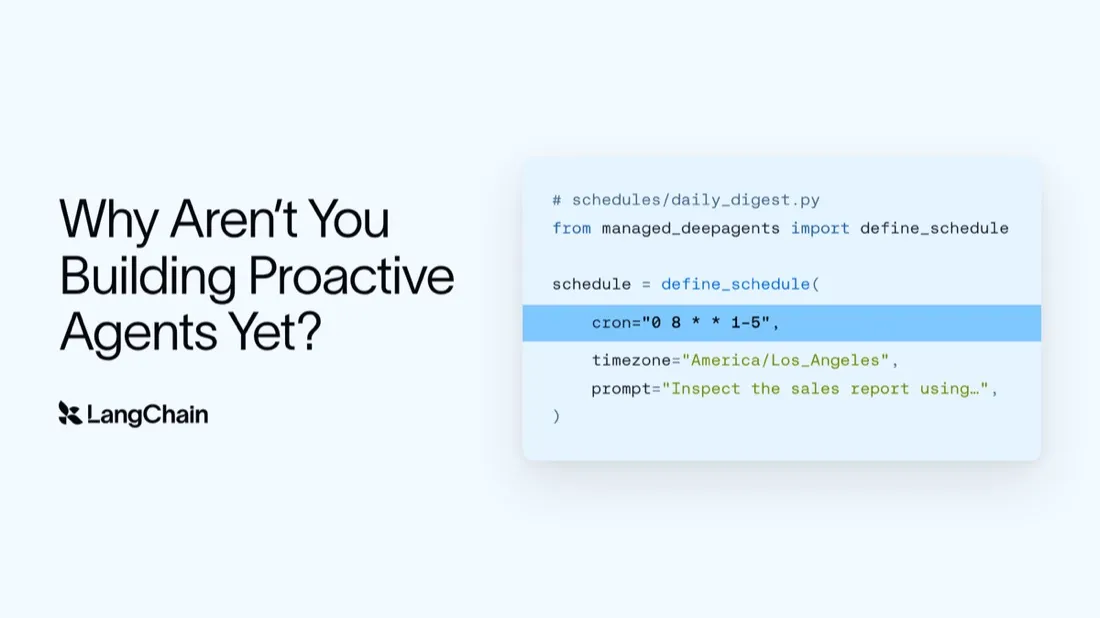
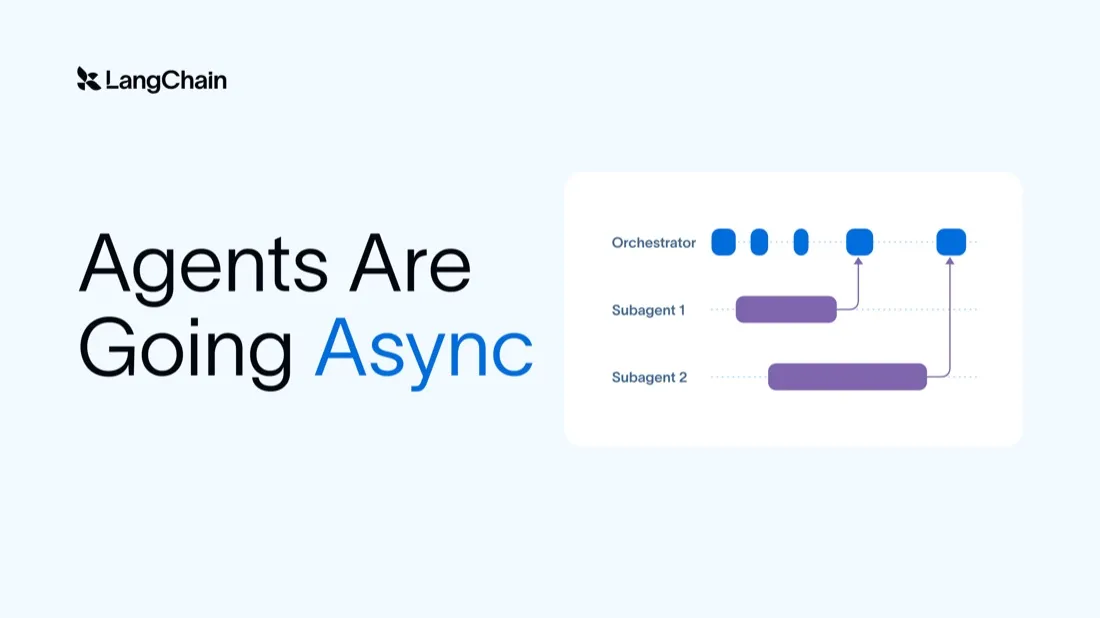
 19:44
 12:36
 20:01